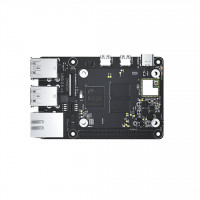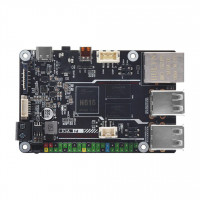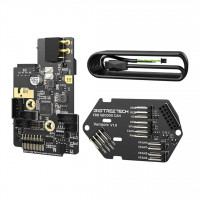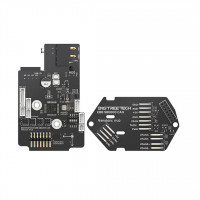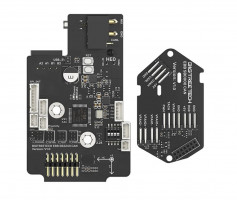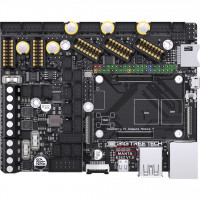
The firmware is the software that controls the 3D printer: it interprets G-code, manages movements, regulates temperatures and coordinates all subsystems. Klipper, RepRapFirmware (RRF) and Marlin are the three dominant open-source firmware, each with a different philosophy and strengths.
Marlin: the historian
Marlin is the world's most popular firmware, pre-installed on most consumer 3D printers (Creality Ender, Prusa, Artillery, Anycubic). It runs entirely on the printer's control board (MCU), with no need for an external computer.
Strengths: Universal compatibility with virtually all boards, huge community and documentation, mature and stable, configuration via C++ header file. Limitations: computing power is limited to the MCU, advanced features such as Input Shaper are limited, configuration requires firmware recompilation.
Klipper: the powerful
Klipper shifts the calculation of trajectories to an external computer (typically Raspberry Pi), leaving only real-time execution to the MCU. This allows more complex calculations and advanced functionality.
Strengths: Native Input Shaper with accelerometer, advanced Pressure Advance, modern web interface (Mainsail, Fluidd), configuration via text file without recompilation, updates without MCU reflash, multi-MCU support. Limitations: requires Raspberry Pi or equivalent (additional cost), steeper initial learning curve, less 'out-of-the-box' than Marlin.
RepRapFirmware (RRF): the professional
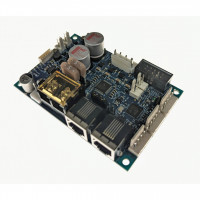
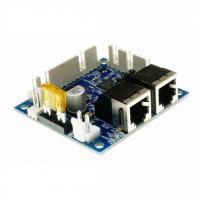
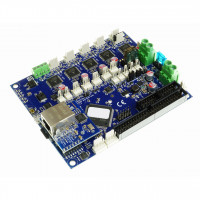
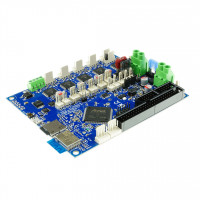
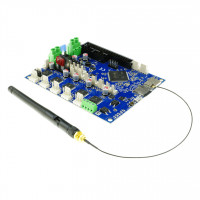
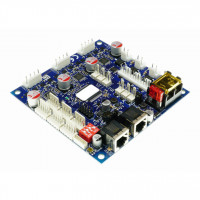
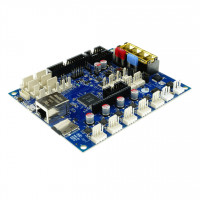
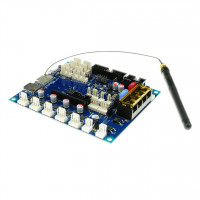
RepRapFirmware is developed by Duet3D and is the native firmware of the Duet boards. It combines computing power and easy configuration in one package, with or without an external computer.
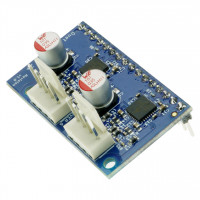
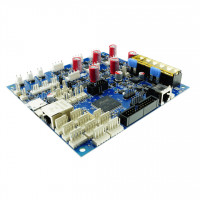
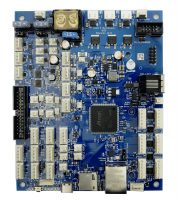
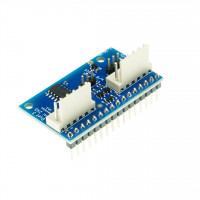
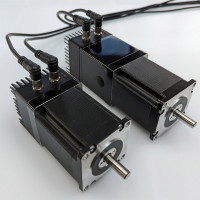
Strengths: configuration via G-code (config.g file), no recompilation required, built-in DuetWebControl web interface, native Input Shaper, excellent multi-extruder handling and tool changing (ideal for INDX Bondtech), native CNC and laser support, excellent code quality and stability. Limitations: works best with Duet3D boards (available at DHM-online), smaller community than Marlin and Klipper.
Comparison table
|
Feature |
Marlin |
Klipper |
RepRapFirmware |
|
External computer |
No |
Yes (RPi) |
Optional (RPi/SBC) |
|
Input Shaper |
Limited |
Excellent |
Excellent |
|
Pressure Advance |
Linear Advance |
Native |
Native |
|
Web interface |
With OctoPrint |
Mainsail/Fluidd |
DuetWebControl |
|
Configuration |
Recompilation |
Text file |
G-code (config.g) |
|
Multi-extruder |
Limited |
Good |
Excellent |
|
CNC/laser support |
Limited |
Base |
Full native |
|
Tool changing |
No |
Community |
Native |
|
Community |
Huge |
Large |
Medium |
|
Compatible cards |
All |
All |
Duet3D (native) |
Which one to choose
Choose Marlin if you have a consumer printer and want to keep the original firmware, or if you want maximum compatibility with the least effort. Choose Klipper if you want maximum performance in speed and quality, have a Raspberry Pi available, and are willing to invest time in initial configuration. Choose RepRapFirmware if you build a custom machine, tool changer or CNC, if you use Duet3D boards, or if you want the combination of power and ease of configuration.
Boards and accessories at DHM-online
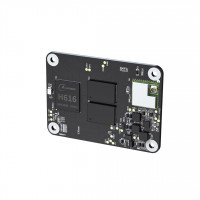
At DHM-online you will find boards Duet3D for RepRapFirmware, Raspberry Pi for Klipper, and Marlin compatible boards. Check out our blog guides for Raspberry Pi 5 + Klipper and for the boards Duet3D.