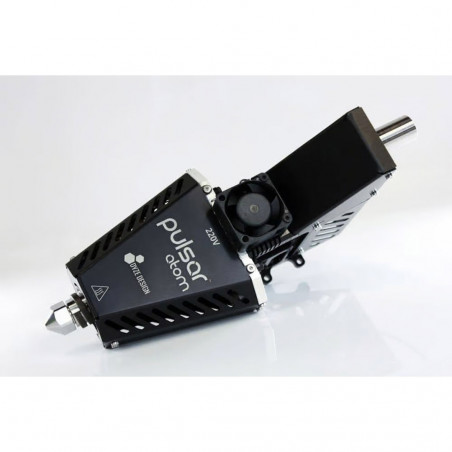
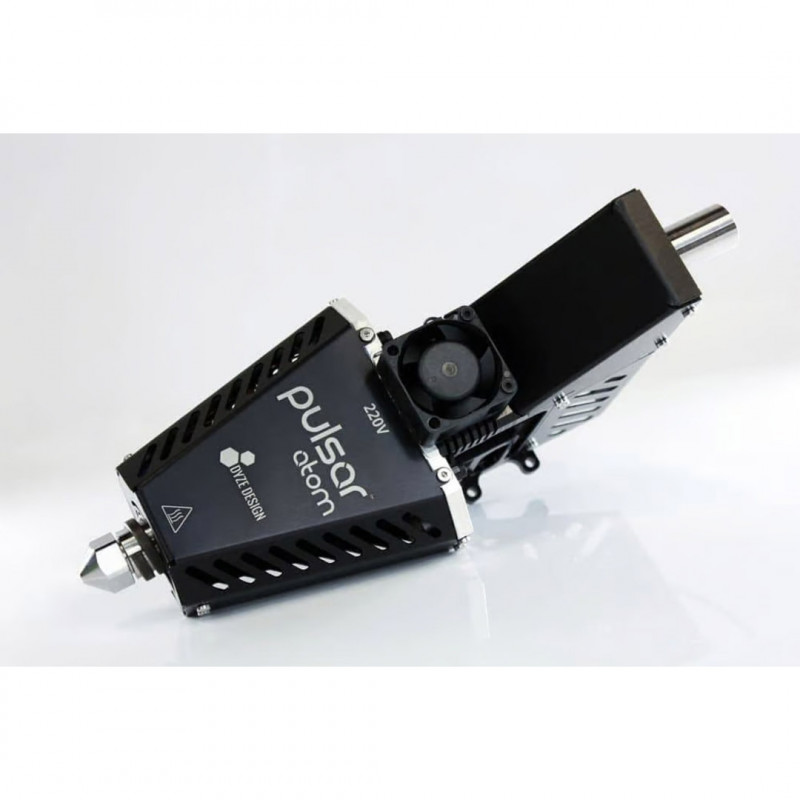
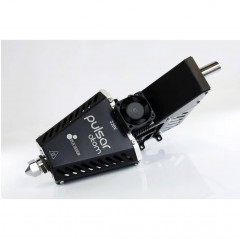
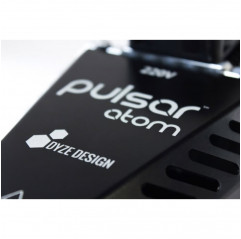
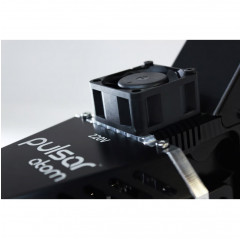
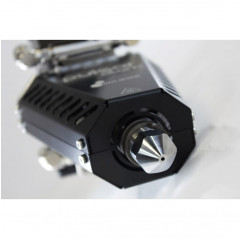
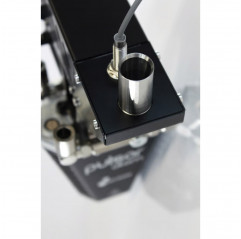
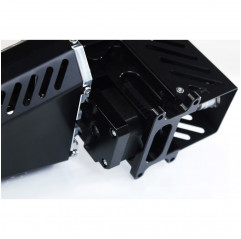
Pulsar Atom goes beyond simply being a pellet extruder; it is a refined piece of precision engineering developed to increase production in 3D printing. With a compression ratio optimized for 3D printing and exceptional stability, it exceeds the limits of thermoplastic materials by reaching high temperatures up to 450°C.
Your key to exceptional precision, speed, and performance in 3D printing is Pulsar Atom. With a material output of 1000 grams per hour (234 mm³/s), discover how Pulsar Atom will change your operations, one layer at a time.
Precision and Performance
Pushing the boundaries of industrial 3D printing.
Pulsar Atom is designed to reach temperatures up to 450°C, opening up a world of high-temperature materials.
No more limitations. No more compromise. Just precision.
Reliability Counts.
Say goodbye to extrusion challenges
Pulsar Atom improves 3D printing with constant extrusion technology. This means the material is fed evenly and the printing process is reliable. High-quality prints are achieved without having to intervene to correct problems or reprint. Pulsar Atom saves time and makes 3D printing easier.
Exceptional Thermal Resistance
With a temperature tolerance of up to 150°C, Pulsar Atom is built to withstand the heat of the environment, ensuring durability and reliability.
Minimum Compression Ratio
With a minimum compression ratio of 1.5, Pulsar™ Atom ensures consistent and reliable extrusion on a wide range of thermoplastics.
Impressive Output Flow
You can count on Pulsar™ Atom to deliver an output flow of about 0.8 kg per hour, improving your production capabilities.
Precise Mass Flow Stability
With mass flow stability of less than 5 percent, Pulsar™ Atom ensures accuracy in every print.
Adapt with Ease
Improve your workflow
Do you struggle with adaptability? Pulsar Atom offers over 45 degrees of nozzle maneuverability and an optional automatic material feed module. Whether you're printing or using robotic arms, it adapts effortlessly to your workflow.
Exceptional Maneuverability
With over 45 degrees of freedom around the nozzle, Pulsar™ Atom is perfect for robotic applications and non-planar printing.
Versatile Nozzles
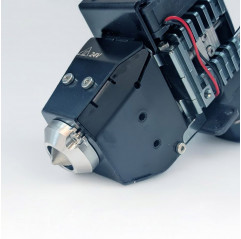
Pulsar Atom offers nozzles with diameters ranging from 0.4 mm to 2.5 mm, providing flexibility for different printing needs.
Liquid Cooling Module
For high-temperature environments, our liquid cooling module ensures optimal performance and longer life.
Automatic Material Supply
Take advantage of the optional Automatic Material Feed add-on for a smooth and seamless printing experience.
Experience Precision Without Compromise
Size doesn't matter; accuracy matters. Pulsar Atom's compact design delivers accuracy beyond expectations. It is lightweight, integrates easily into your setup and is universally compatible.
- Weight under 1.5 kg and height under 245 mm
- Available in 110V or 220V versions
- Integrates with open-source firmware and popular 3D printer controller boards
- Perfect for robotic arms
Technical Information
| Parameter |
Specifications |
| Weight |
Less than 1.5 kg |
| Height |
Less than 245 mm |
| Flow Rate (Output Flow) |
~1 kg per hour |
| Nozzle Diameters |
0.4 mm - 0.6 mm - 0.9 mm - 1.2 mm - 1.8 mm - 2.5 mm |
| Supply voltage |
110V or 220V |
| Max. ambient temperature |
Up to 150°C |
| Max. operating temperature |
Up to 450°C |
| Compatible pellets |
Less than 5 mm (1 mm to 5 mm) |
Package contains: 1 x Pulsar Atom Precision Pellet Extruder - Dyze Design