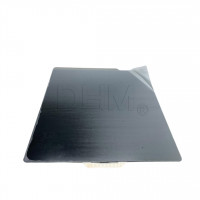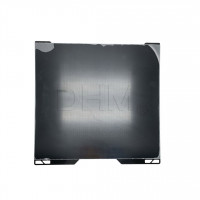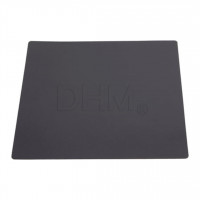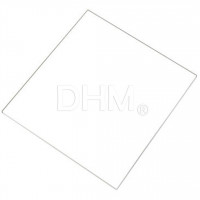
The build plate is the surface on which the first layer is deposited. Its quality and surface type determine the adhesion of the first layer, the ease of removal of the finished part and the flatness of the print base. Choosing the right plate for the material being printed makes a huge difference.
PEI (polyetherimide) plate
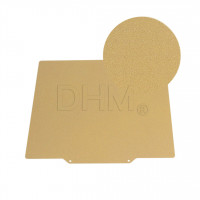
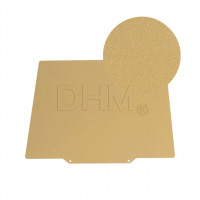
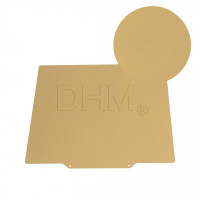
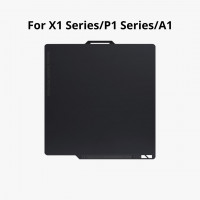
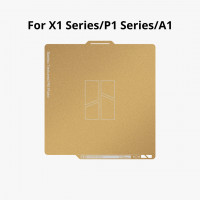
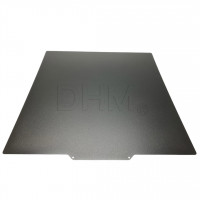
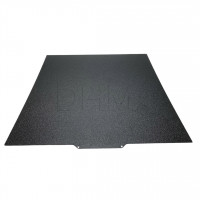
PEI has become the gold standard for modern 3D printers. It is a high-performance polymer sheet applied to a flexible magnetic spring steel plate. PEI offers excellent hot-melt adhesion for PLA, PETG, ABS, ASA and most materials, easy cold release (the part comes off on its own as it cools), and a smooth (smooth PEI) or textured (textured PEI) surface to choose from.
Smooth version: glossy, specular print base, maximum adhesion. Textured version: base with uniform matt pattern, easier release for PETG (which tends to adhere too much to smooth PEI), aesthetically pleasing appearance on print base.
Glass plate
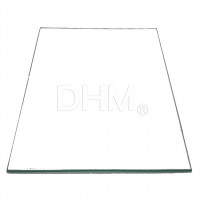
Borosilicate glass (Borofloat type) offers the absolute best flatness: a perfectly flat surface guarantees a uniform first layer over the entire printing area. It requires an adhesive (glue stick, hairspray or specific products) for most materials. Removal is done by cooling the plate and levering with a squeegee.
Advantages: absolute flatness, economical, easy to clean, virtually indestructible. Disadvantages: requires adhesive, less immediate removal, glass is a thermal insulator (slows down heating of the plate).
Magnetic flexible steel plate (without coating)
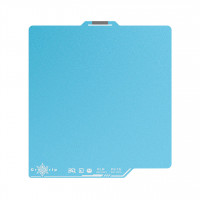
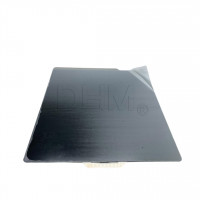
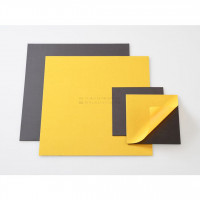
The magnetic spring steel plate, without PEI coating, is used as a base for interchangeable adhesive sheets or as a direct printing surface with adhesive. The main advantage is its flexibility: by bending the plate after printing, the part comes off easily.
Comparison table
|
Surface |
PLA Adhesion |
PETG Adhesion |
ABS Adhesion |
Removal |
Flatness |
|
PEI smooth |
Excellent |
Too much (risk) |
Good |
Easy cold |
Good |
|
PEI textured |
Good |
Excellent |
Good |
Very easy |
Good |
|
Glass + glue |
With glue |
With glue |
With glue |
Medium |
Excellent |
|
Bare glass |
Scarce |
Scarce |
Scarce |
Scarce |
Excellent |
Maintenance
PEI: Clean with isopropyl alcohol before each print to remove grease and residue. Every 10-20 prints, wash with warm soapy water. Do not use acetone on textured PEI. Glass: clean with isopropyl alcohol. Remove old glue sticks with warm water. All: avoid touching the surface with fingers (grease from the prints reduces adhesion).
Print plates at DHM-online
At DHM-online you will find PEI print plates (smooth and textured), borosilicate glass and flexible magnetic plates for the most popular printers. Browse the 3D Printing Accessories section to find the plate compatible with your machine.
Frequently asked questions about print platters: adhesion and maintenance guide
1. What is the difference between smooth PEI and textured PEI platter?
Smooth PEI offers a total contact surface, ensuring maximum adhesion and a perfectly glossy, specular print base finish. Textured PEI, on the other hand, has a grained surface that provides a matt, professional appearance. The latter is particularly recommended for PETG, since on smooth PEI, the adhesion of this material can be so strong that it risks damaging the coating during removal.
2. Why is borosilicate glass still a valid choice?
Borosilicate glass remains the material of choice when the top priority is flatness. While magnetic platens can follow the slight deformations of the heated plate underneath, glass remains perfectly flat, guaranteeing a uniform first layer over the entire printing area. It is the ideal solution for those printing large mechanical parts that require a perfectly flat base, provided that specific adhesives such as lacquer or glue sticks are used.
3. How to prevent PETG from ruining the printing plate?
PETG has a tendency to create a very strong chemical bond with smooth surfaces. If you print on smooth PEI or bare glass, the risk is that the part will peel off surface fragments during removal. To avoid damage, it is advisable to use a textured PEI plate or to apply a layer of glue stick or a release agent to the glass, which acts as a protective barrier facilitating cold release.
4. How is the PEI plate properly cleaned to maintain adhesion?
Routine maintenance of PEI involves the use of isopropyl alcohol between prints to remove fingerprints and skin grease, which are the main enemies of adhesion. Periodically, it is useful to wash the plate with warm water and common dish soap to remove residue build-up. Caution: never use acetone on textured PEI, as it may permanently degrade the surface finish.
5. What to do if the workpiece does not come off the flexible magnetic plate?
The advantage of magnetic spring steel systems is their flexibility. If the workpiece does not detach spontaneously after cooling, remove the plate from the heated plate and gently bend it outwards. The difference in elasticity between the steel and the moulded material will cause the part to separate from the surface without the need to use metal spatulas, which could scratch the coating. At DHM-online you will find spare parts and magnetic plates for all major 3D printer models.