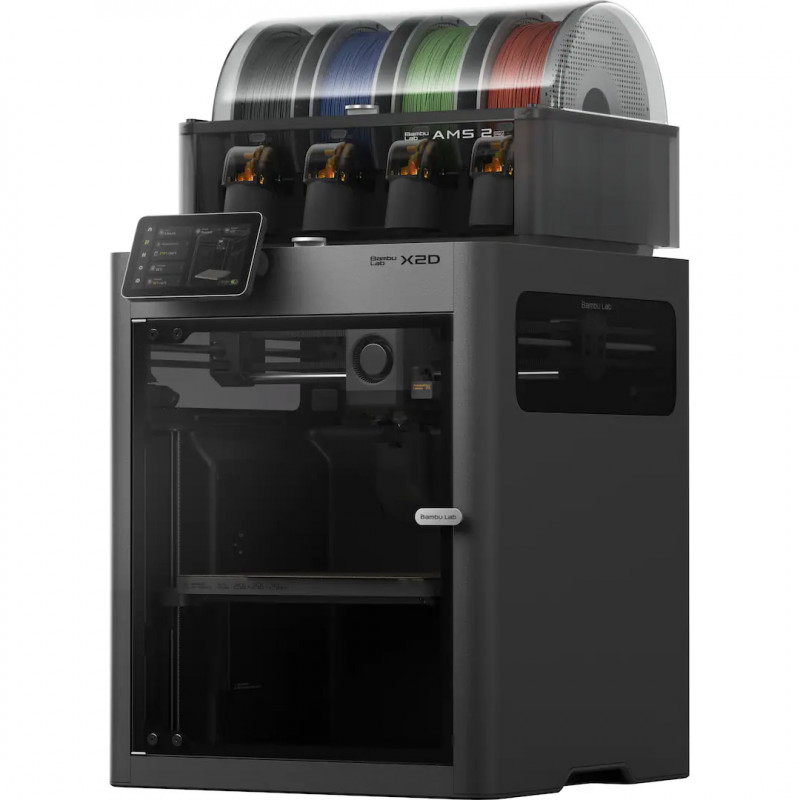
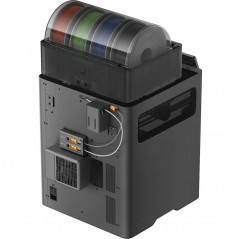
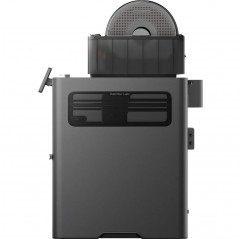
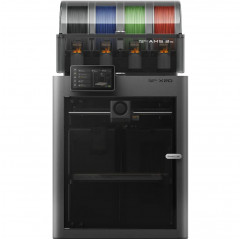
Bambu Lab X2D: The New Era of Desktop Additive Manufacturing
Dual Nozzle, 65°C Active Thermal Chamber and Second Generation Artificial Intelligence
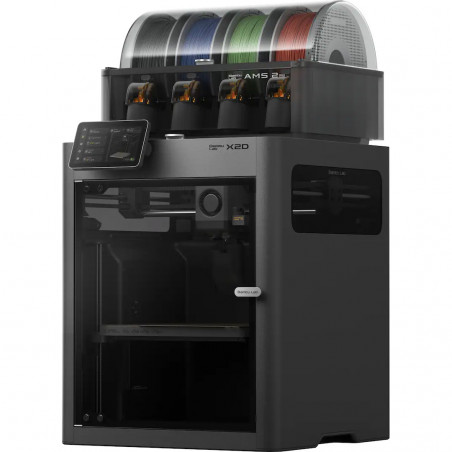
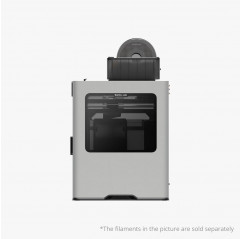
The Bambu Lab X2D is not simply the evolution of the award-winning X1 series; it is a totally reinvented 3D printing platform for 2026. Designed to break down the barriers between rapid prototyping and final production, the X2D introduces technologies hitherto reserved exclusively for industrial machines costing ten times more. With a build volume of 256 x 256 x 260 mm and a dual extruder servo system, this machine is poised to become the new standard for R&D labs, design studios and advanced makers.
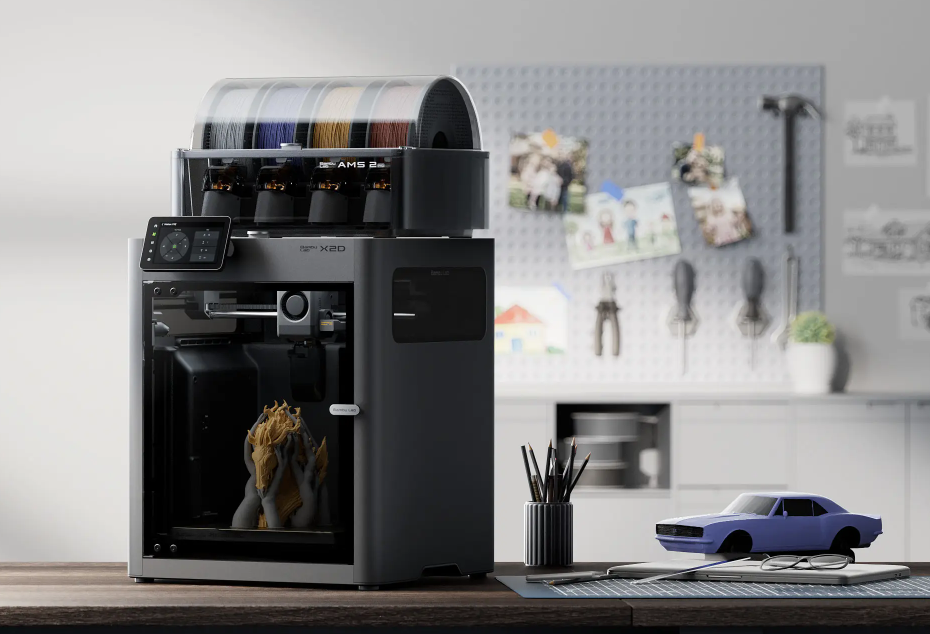
1. Mechanical Architecture and Dual System Nozzle: Uncompromised Efficiency
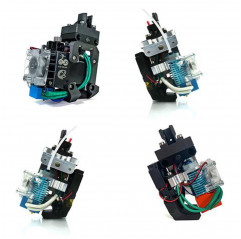
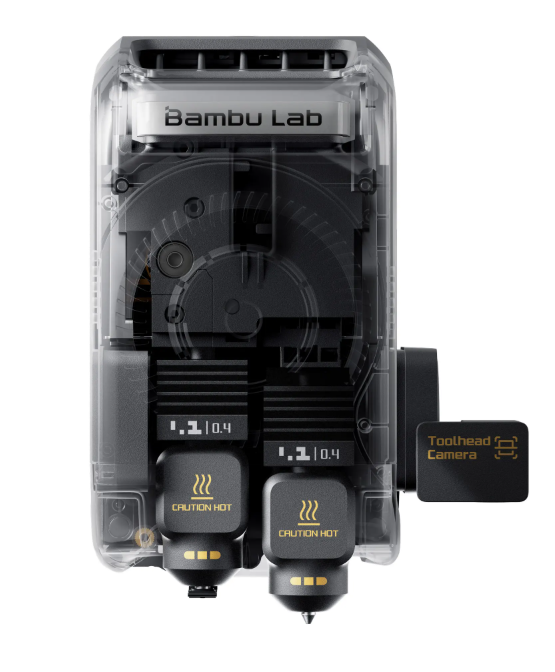
The beating heart of the X2D is its innovative Dual System Nozzle. Unlike conventional IDEX (Independent Dual Extruders) systems, which double the weight on the crossbar, the X2D uses an ultra-light printhead with a gear mechanism and integrated trigger.
- Changeover Nozzle in a Fraction of a Second: Thanks to a mechanically operated lever system, the head switches between the main and auxiliaryhotend without additional motors on the head. This reduces inertia, allowing accelerations of 20,000 mm/s² and flawless surfaces.
- Soluble and Technical media: Forget the hassle of removing media with cutters. Dedicating the second nozzle to materials such as PVA or Breakaway, the X2D creates perfect substrate interfaces that dissolve in water or peel off leaving a 'silky smooth' surface.
- Revolutionary Savings: Comparative tests show material savings of up to 45.7 per cent and a 34 per cent reduction in print time compared to the X1C in colour changes, as the X2D does not require huge purge towers to clean the nozzle.
2. Advanced Thermal: The 65°C Actively Heated Chamber
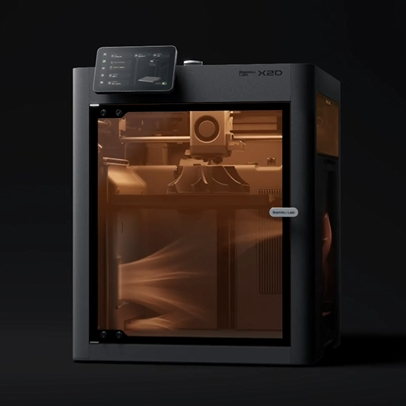
Printing technical polymers requires more than just a hot plate. The X2D is equipped with an actively heated chamber that reaches and maintains 65°C evenly.
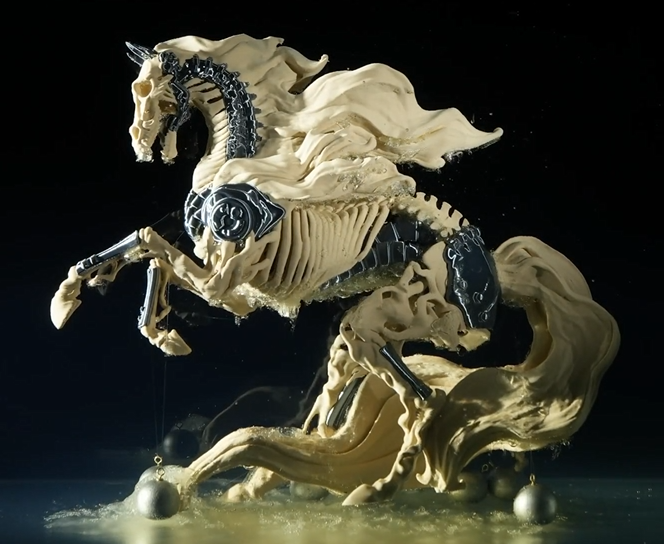
- Goodbye Warping: Materials such as ABS, ASA, PC and Nylon (PA) suffer from violent thermal shrinkage. By heating the printing environment, internal tensions are eliminated, allowing the production of large structural parts that remain perfectly flat and accurate.
- Superior Inter-Layer Adhesion: The hot chamber slows the cooling of the newly deposited filament, allowing the molecular chains to better intertwine between layer. The result is parts with almost as much mechanical strength in the Z axis as in the X and Y axes.
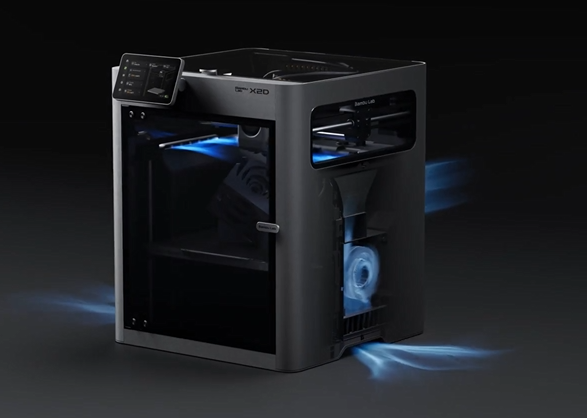
- Adaptive Airflow Management: Two side air intakes (left and right) constantly renew the air for low-temperature materials (PLA/PETG), ensuring clean bridging and clear overhangs without sacrificing the thermal stability required for high-tech materials.
3. Engineering Precision: Vision Encoder and Adaptive Calibration
Bambu Lab has introduced compensation algorithms on the X2D that make the machine 'aware' of its own state of wear and environmental variations.
- 50 Micron Vision Encoder: Belts and mechanical components can lose precision over time. X2D's Vision Encoders detect the slightest drift in movement, compensating for it in real time to maintain consistent volumetric accuracy, even after thousands of hours of operation.
- Automatic Hole and Contour Compensation: Thanks to deep integration with Bambu Studio, the printer recognises natural material shrinkage and corrects the path. Bearing holes and mechanical fits will be perfect the first time, without the need for tedious manual calibration.
- Dynamic Flow Calibration: The system is not limited to a fixed value. It models the extrusion behaviour according to filament moisture and nozzle wear, ensuring consistent extrusions even with imperfectly preserved coils.
4. Servo PMSM Extruder: The Science of the Perfect Surface
Unique to Bambu Lab is the Servo PMSM (Permanent Magnet Synchronous Motor) system. Standard motor extruders stepper suffer from micro-fluctuations that create visible patterns on the walls of objects.
- 20 kHz sampling: driver of the extruder monitors torque and position 20,000 times per second. Any slightest resistance in the filament path is instantly compensated for, levelling the flow and producing walls so smooth they look injection-moulded.
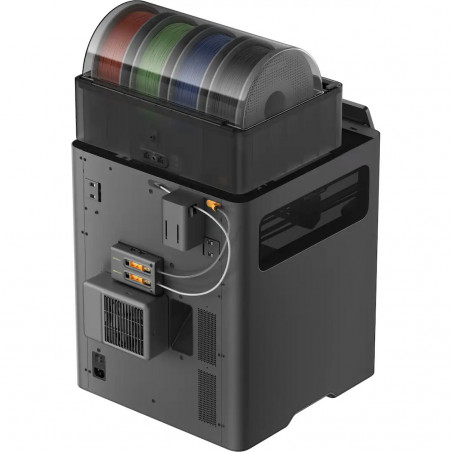
- Dual-Drive Concept: An auxiliary extruder on the rear panel helps push the filament along the conduit, while the main extruder on the head handles the final precision. This 'Push-Pull' configuration ensures stable delivery even with TPU or complex AMS paths.
5. Artificial Intelligence and Safety: A Lab in the Living Room
The X2D is designed to be used anywhere, from the machine shop to the living room at home, thanks to unprecedented safety and filtering standards.
- Triple Filtration: Derived from the H series, the purification system uses a G3 pre-filter, a HEPA H12 for micro-particles and activated coconut-shell carbon for VOCs (volatile organic compounds). It is UL 2904 certified, ensuring clean air when printing Bambu PLA Basic and PETG Basic.
- Dual AI Camera System: A wide-angle camera monitors the entire platter for 'spaghetti' and debris, while a macro camera on the printhead analyses the quality of the first layer and prevents plastic build-up on nozzle.
- 31 Status Sensors: Every critical component is monitored. From filament tangle sensors to precise odometry in the AMS, the X2D alerts you on your phone via theBambu Handy app before a problem can ruin your print.
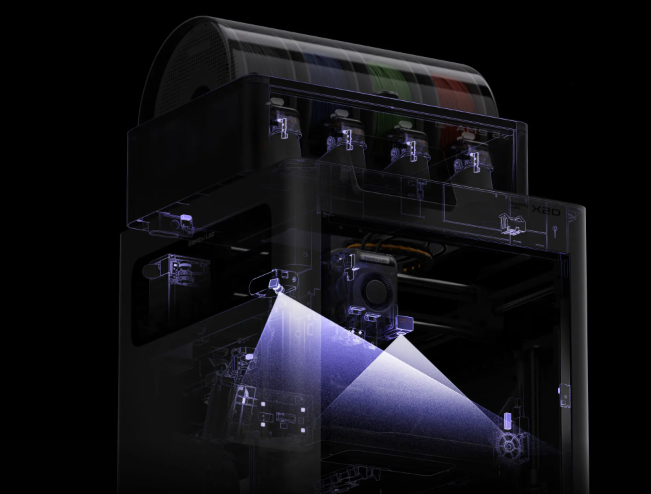
6. Software and Connectivity: From Idea to Object in 3 Touches
The integration of hardware and software is what defines the Bambu Experience.
- MakerWorld & Bambu Handy: Explore over 400,000 optimised designs. Select the design from your smartphone and launch it on the X2D: the 3MF file already includes all speed, media and temperature settings. No learning curve required.
- Bambu Studio: The powerful slicer based on extensive testing. Each material profile has been validated to balance speed, aesthetics and structural integrity. Dual nozzle management is automated, allowing clean colour transitions and minimal waste.
- Over-the-Air Updates: Like a smartphone, the X2D receives quarterly firmware updates that introduce new features and optimise engines, ensuring your printer improves over time.
FAQ - Frequently Asked Questions about the Bambu Lab X2D
1. What are the structural and performance differences compared to the X1-Carbon series?
The X2D represents a complete generational leap. While the X1-Carbon set the standard for speed, the X2D introduces the dual nozzle system to eliminate multi-material waste, an actively heated chamber up to 65 °C for technical materials (as opposed to the passive chamber of the X1), and a motion system with Vision Encoder for consistent 50 micron accuracy over time.
2. Does the Dual Nozzle system affect print volume?
The intelligent head design maximises space. In single nozzle (main) mode, you use the entire volume of 256x256x260 mm³. In double nozzle mode (for media or multi-material), the usable area is 235.5x256x256 mm³. This provides a compact machine but one capable of handling complex workpieces without the external clutter typical of IDEX systems.
3. How does 'Adaptive Calibration' based on Vision Encoders work?
Traditional printers lose precision as the belts wear. X2D uses optical sensors (Vision Encoders) that monitor the actual movement of the head, correcting any mechanical drift in real time. This ensures that a gear printed today will be identical to one printed two years from now, maintaining industrial tolerances of 0.05 mm.
4. What makes the Servo PMSM extruder superior to standard extruders?
The Servo extruder with permanent magnets samples pressure and position at 20 kHz. This eliminates the micro-pulsations typical of motors stepper, ensuring a perfectly linear extrusion flow. The result is a part surface free of visual artefacts, referred to as an 'injection finish'.
5. Is the X2D compatible with X/P series printing platens and accessories?
The X2D supports all Bambu Lab 256x256 mm print platters (PEI Textured, Smooth, SuperTack). However, it is equipped with a new optical detection system: "first generation" plates without markers may require manual selection on the screen. As for the Hotend, the X2D uses the new dedicated series (Series 2), interchangeable between right and left head.
6. Can I connect multiple AMS units to print in multiple colours?
Absolutely, yes. The X2D can handle up to 4 AMS 2 Pro units or 8 AMS HT units (specialised for technical materials). In a combined configuration, you can manage up to 24 filament slots for printing with a palette of 25 different colours or materials (using both nozzle).
7. Is the 65 °C chamber safe for PLA printing?
Yes. When printing PLA or PETG, the X2D activates the "Adaptive Cooling Mode". The exhaust fan and dual side exhausts work together to keep the chamber cool, preventing clogging of nozzle (heat creep) typical of closed machines when printing low temperature polymers.
8. What is the real advantage of the rear auxiliary extruder?
The auxiliary extruder acts as a 'booster' for the filament, overcoming the friction of PTFE tubes especially with distant AMS units. This relieves the work of the main extruder on the print head, allowing a lighter head (less inertia) and consistent delivery accuracy.
9. How does the X2D ensure office air quality?
The printer incorporates a three-stage purification system (G3 Pre-filter, HEPA H12, Activated Carbon) and is UL 2904 certified for Bambu PLA Basic and Bambu PETG Basic printing. It can filter VOCs and ultra-fine particles, with a specific post-printing purification function that cleans the air in the chamber before releasing the door, eliminating any residual odour.
10. What happens in the event of a power failure or end of filament?
Thanks to its 31 sensors, the X2D handles any unforeseen event. It supports complete print recovery after a power loss and has odometry, tangle and filament end sensors. If a problem is detected, the machine pauses and sends an instant push notification to your smartphone via Bambu Handy.
11. Can I mount Nozzle "High Flow" on the X2D?
Certainly. The X2D supports the optional Hotend high flow, which increases the fusing capacity from 40 mm³/s to an impressive 65 mm³/s. This is ideal for professional large prints, reducing infill times by up to 30% without degrading the quality of the outer walls.
Enter the future of 3D printing today with Bambu Lab X2D and DHM-online.