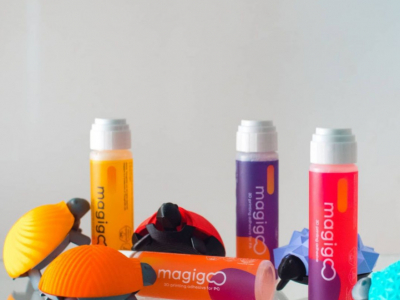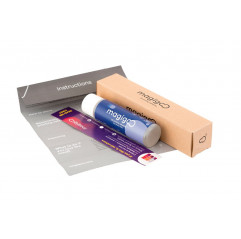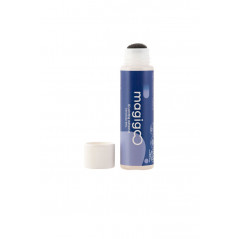
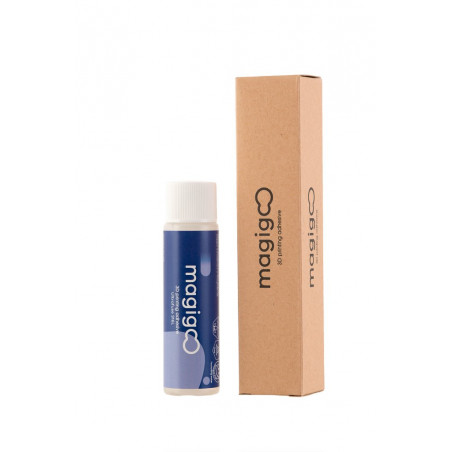
Magigoo: the adhesive for 3D printing.
Magigoo Metal is designed to work with PP (Polypropylene) filaments.
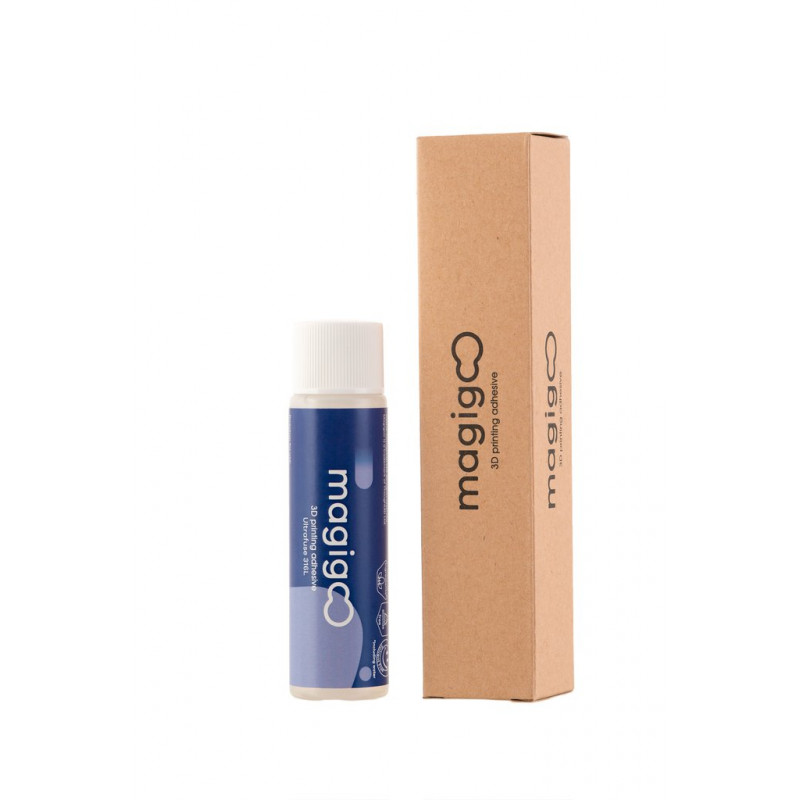
Magigoo Metal is a professional adhesive designed for first layer adhesion of metal polymer composites, especially BASF 316L. Magigoo Metal is non-hazardous, non-flammable and is also approved for use in filament post-processing steps. Magigoo Metal also allows for easy removal of "green parts" from the printing table.
Why Magigoo Metal:
BASF Ultrafuse 316L enables the production of solid 316L stainless steel parts using desktop FDM 3D printers and a sintering process. Ultrafuse® 316L filament consists of highly refined metal particles embedded in thermoplastic binders. Therefore, as a filament, the metal-polymer composite presents none of the occupational and safety risks associated with handling fine metal powders. This allows for economical, simple and safe 3D printing of stainless steel parts.
Due to the thermoplastic nature of the binder materials in the filament and thermal cooling during FDM printing, parts printed with BASF Ultrafuse® 316L are susceptible to shrinkage. In addition, due to the delicate nature of the "green part", care must be taken when removing parts printed in BASF Ultrafuse® 316L to avoid deformation. Magigoo Pro Metal provides secure and reliable adhesion during printing and allows for easy removal of the molded part by immersion in water, thus avoiding potential damage to the green part.
Usage:
For the use of Magigoo Metal, a print bed temperature of 95-105°C is recommended, but printing conditions may vary between printers:
- Shake the bottle
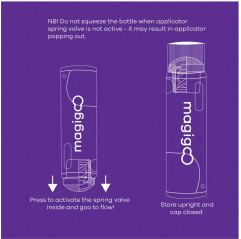
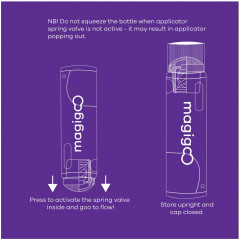
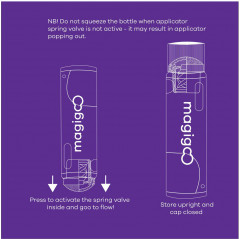
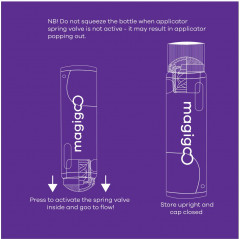
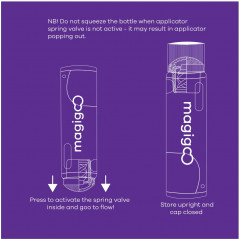
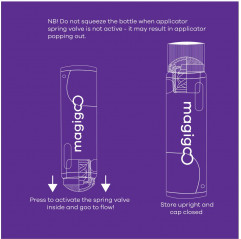
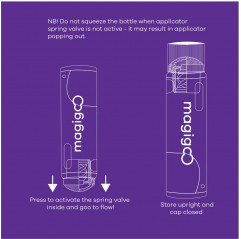
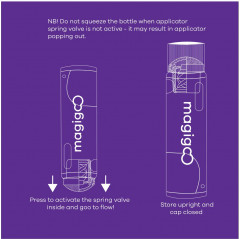
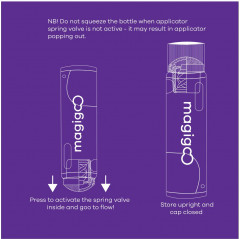
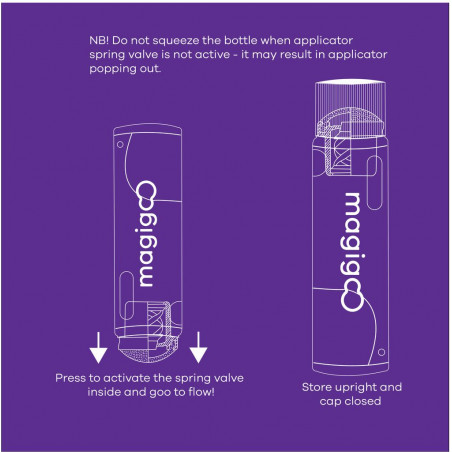
- Apply on the desired area by pressing the tip on the surface (activating the internal valve) and spreading as needed.
- Print according to the specifications of the filament or printer
- After printing. Submerge the entire print bed in water, or just the entire printed piece. After a short period of time, typically 30 minutes to 2 hours, depending on size, the piece should come off on its own or otherwise will be easy to remove with a gentle twist.
- Wipe - Use a damp cloth to clean.
Safety:
Follow the instructions found in the data sheet for best results.
Why is a specific adhesive needed for metal 3D printing instead of a standard one?
Printing metal filaments requires very critical heat management. Magigoo Metal is formulated to withstand the high platen temperatures required for these materials and, above all, to ensure that the 'green part' (the part before the sintering process) remains perfectly flat. Since metal parts are very dense and heavy, they tend to lift (warping) more easily than plastic; this adhesive creates an ultra-strong chemical bond that prevents detachments that are fatal to printing success.
Qual è il materiale migliore per pezzi che devono stare all'esterno?
L'ASA è il materiale consigliato per l'uso esterno. A differenza dell'ABS, l'ASA è altamente resistente ai raggi UV, non ingiallisce e mantiene le sue proprietà meccaniche anche sotto l'esposizione diretta del sole e degli agenti atmosferici.
Perché la mia stampa in PETG presenta molti "fili" (stringing)?
Il PETG è un materiale molto viscoso. Per ridurre lo stringing, è fondamentale calibrare correttamente la temperatura di stampa e la distanza di ritrazione. Inoltre, assicurati che il filamento sia asciutto, poiché l'umidità assorbita peggiora drasticamente questo fenomeno.
Posso mescolare resine di marche diverse?
In generale è sconsigliato, poiché ogni resina ha tempi di esposizione e composizioni chimiche differenti. Mescolarle potrebbe portare a fallimenti di stampa o a una polimerizzazione incompleta del pezzo.
Come si smaltiscono i residui di resina 3D?
La resina liquida è considerata un rifiuto speciale. Non deve mai essere gettata negli scarichi domestici. È necessario polimerizzare i residui liquidi (esponendoli al sole o a lampade UV) fino a renderli solidi, dopodiché possono essere smaltiti seguendo le normative locali sui rifiuti plastici speciali.
Qual è la differenza tra una piastra in alluminio normale e una rettificata 5083?
La piastra normale può presentare curvature invisibili all'occhio ma enormi per l'ugello di una stampante 3D. La piastra 5083 rettificata è lavorata meccanicamente per essere perfettamente piana e distesa termicamente, il che significa che non si "imbarcherà" mai quando la riscaldi a 80-100°C.
Posso incollare un tappetino riscaldante direttamente sulla piastra magnetica?
No, il tappetino riscaldante deve essere applicato sulla parte inferiore della piastra rigida (alluminio). La superficie magnetica va applicata sulla parte superiore. Il calore passerà attraverso l'alluminio e la base magnetica per scaldare la superficie in PEI o acciaio.
Come si pulisce correttamente una superficie in PEI?
Per mantenere l'adesione al massimo, è sufficiente pulire la superficie con alcool isopropilico (IPA) tra una stampa e l'altra. Se l'adesione cala drasticamente dopo molti utilizzi, un lavaggio con acqua tiepida e sapone neutro per piatti aiuterà a rimuovere i residui grassi delle dita.
È necessario isolare il piano di stampa sotto il riscaldatore?
Non è obbligatorio, ma è caldamente consigliato. L'isolamento riduce i tempi di riscaldamento del 30-50% e mantiene la temperatura molto più stabile, evitando che il calore residuo interferisca con il funzionamento dei sensori o dei motori situati sotto il piano.