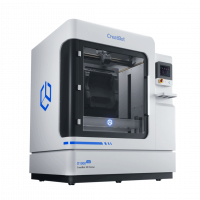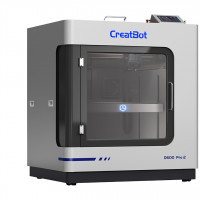
3D printing is no longer a technology of the future: it is the present of industry, medicine, architecture and design. Companies use it to reduce costs, accelerate time-to-market, produce lighter and stronger parts. Preparing students to understand and use this technology is not an option: it is a necessity for their professional future.
A cross-subject technology
The value of 3D printing in education lies in its transversality. It is not confined to the technology lab: it crosses different disciplines offering a concrete bridge between theory and practice. Architecture students print models of their projects. Engineering students prototype functional parts. Science students build models of molecules, cells and organs. Mathematics students materialise 3D graphs, solids and geometric concepts. Design and art students create three-dimensional works. Automotive students print spare parts and customisations.
The European and Italian context in 2026
Europe has recognised additive manufacturing as a strategic technology. Countries like Germany, the UK and Italy are actively investing in training STEM with dedicated programmes. In Italy, the National Digital School Plan and PNRR funds have accelerated the adoption of 3D printers in schools. The MEPA (Public Administration Electronic Market) makes the purchase of 3D printers and materials accessible to schools and universities with transparent and competitive procedures.
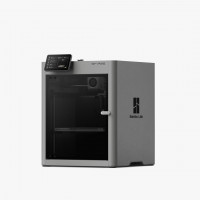
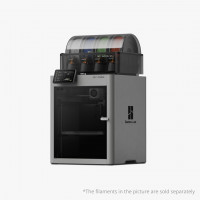
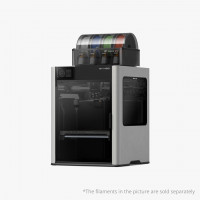
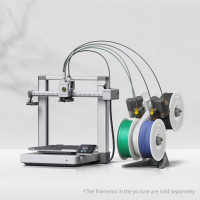
Despite progress, many schools still lack the awareness, resources or confidence to integrate 3D printing into the curriculum. The good news is that printer costs have plummeted compared to just a few years ago: a Bambu Lab A1 or P2S now offers professional performance at a fraction of the cost of first-generation machines.
Concrete benefits for students
3D printing in education offers tactile feedback on abstract concepts (touching a mathematical graph or a molecule changes understanding), development of computational thinking (from modelling CAD to G-code), trial-and-error learning in a safe context (failed print is an opportunity for analysis, not a failure), skills directly expendable in the world of work, and higher motivation and engagement than traditional education.
How to build a curriculum around 3D printing
Seven steps to successfully integrate 3D printing into the curriculum. First: identify and train the teachers who will lead the project (no need for engineers, just curiosity and a desire to experiment). Second: build a library of resources (downloadable models, guides, video tutorials). Third: notify students and colleagues when the lab is ready. Fourth: train users on the rules of use and safety. Fifth: implement a management plan to optimise the use of printers (shifts, reservations, maintenance). Sixth: display the best projects to inspire and motivate. Seventh: plan expansion to meet growing demand.
Where to start: the right printers for the school
For a school lab in 2026, Bambu Lab printers are the right choice: instant out-of-the-box setup, automatic calibration, closed chamber for security (P2S), intuitive and free software (Bambu Studio), and multi-colour printing with AMS to capture students' interest. At DHM-online you will find Bambu Lab A1 and P2S, PLA filaments in all colours, and lab accessories. All purchasable via MEPA.
Frequently asked questions about 3D printing in schools
1. Why is 3D printing considered a core competence in 2026?
In 2026, additive manufacturing has become an industry standard in sectors such as medicine, automotive and architecture. Integrating 3D printing in schools is not just about teaching how to use a machine, but developing computational thinking and the ability to transform a digital idea into a physical object. These skills are among the most in demand on the job market today, making knowledge of the CAD/CAM workflow essential for students' professional futures.
2. How can schools buy 3D printers with NRP funds?
Educational institutions can use PNRR (National Recovery and Resilience Plan) and National Digital School Plan funds to set up state-of-the-art laboratories STEM. The purchase must be made through the MEPA (Public Administration Electronic Marketplace) portal, ensuring transparency and regulatory compliance. Specialised suppliers such as DHM-online offer direct support for the management of quotes and institutional purchasing procedures for models such as the Bambu Lab A1 and P1S.
3. What are the best 3D printers for a school lab?
For educational use in 2026, Bambu Lab printers (A1 and P1S models) are best suited due to their plug-and-play philosophy. They offer automatic calibration, high printing speed and multi-colour systems (AMS) that drastically reduce waiting times and technical failures. For maximum classroom safety, it is preferable to choose models with a closed chamber (such as the P1S) and air filters, especially when using materials other than PLA.
4. Is it difficult to integrate 3D printing into non-technical subjects?
On the contrary, 3D printing is a transversal technology. In mathematics, it makes it possible to materialise complex geometric solids; in science, to create precise anatomical or molecular models; in history, to reproduce 3D-scanned archaeological finds. The shift from abstract concept to tactile feedback increases student engagement and facilitates understanding of topics that would otherwise remain purely theoretical.
5. What are the running and maintenance costs of a 3D printer at school?
Thanks to technological developments, running costs are now very low. The main material, PLA filament, is cheap, biodegradable and safe for classroom use. Maintenance on new generation machines is minimal thanks to modular components and easily replaceable nozzles. To optimise resources, it is recommended to form a small group of 'lead teachers' and plan printing shifts using software such as Bambu Studio, which is freely accessible to all students.