Details
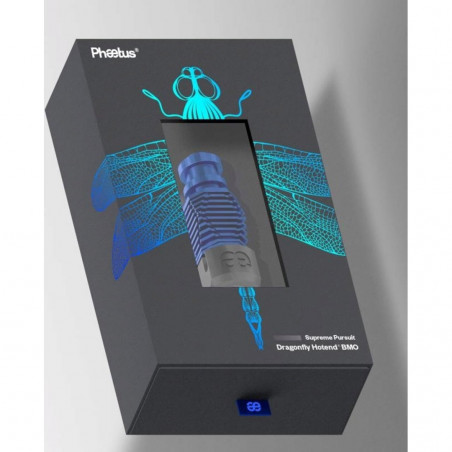
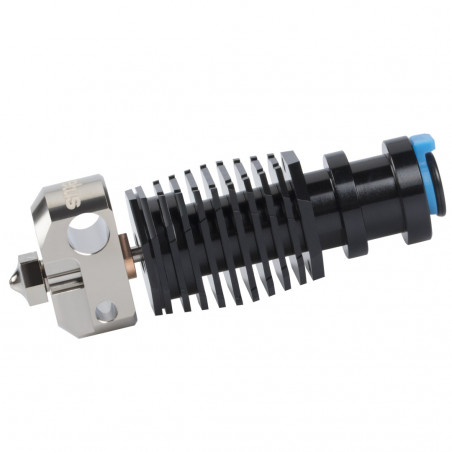
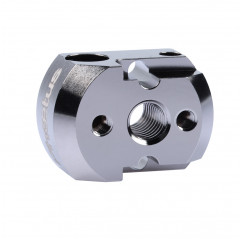
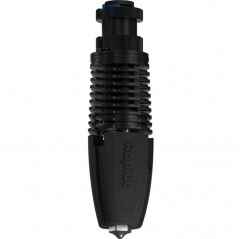
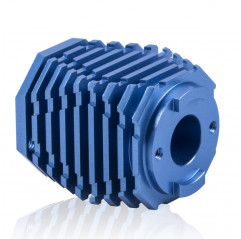
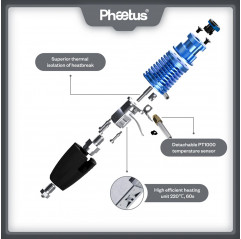
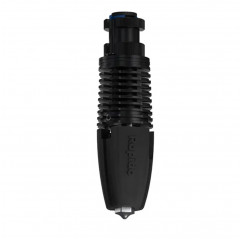
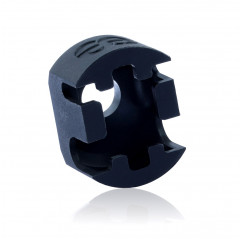
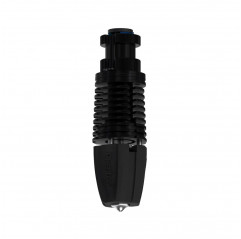
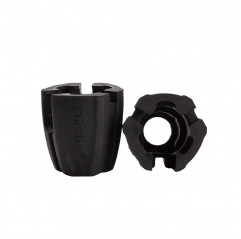
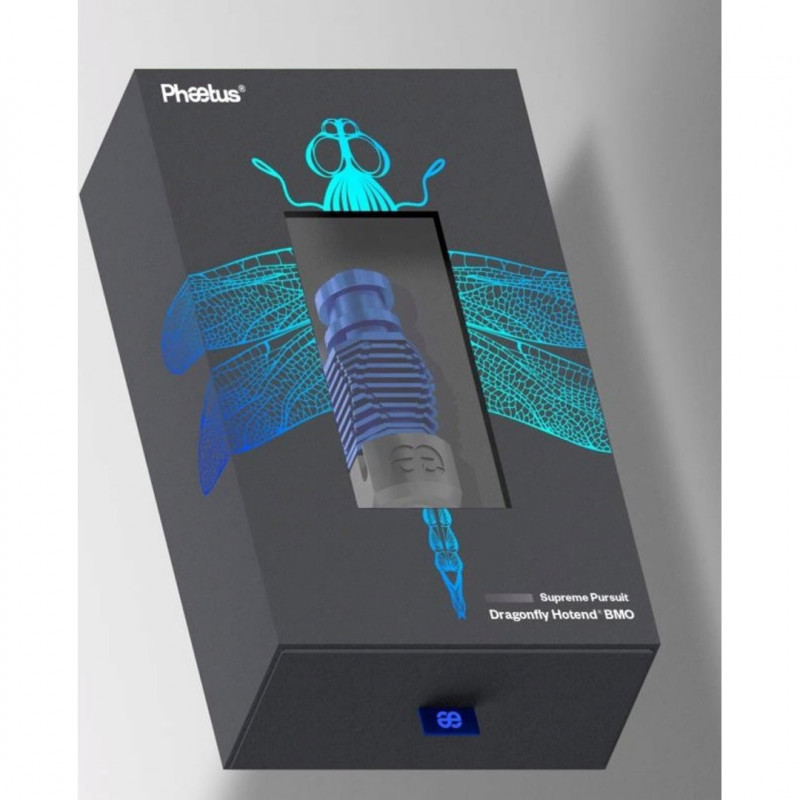
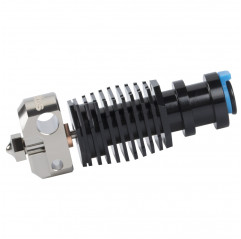
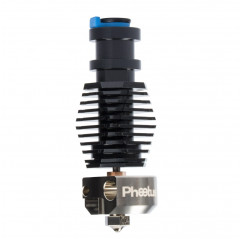
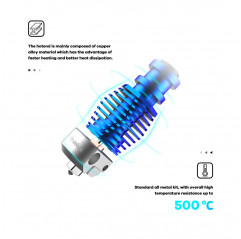
Phaetus Dragonfly Is an all-metal type hotend. Developed mainly from copper alloy for improved thermal conductivity.
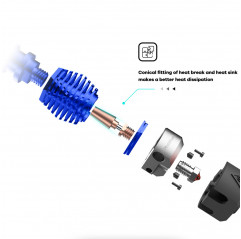
It can withstand temperatures up to 500°C, which is why it is compatible with many types of filament. There is a tapered connection between heatbreak and heatsink, which provides good heat dissipation.
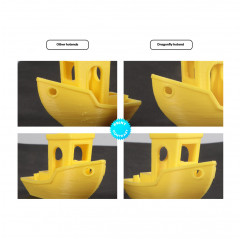
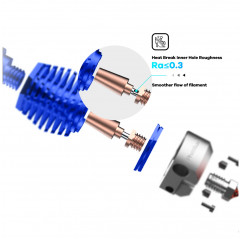
The roughness Ra ≤ 0.3 allows good printing quality, as it ensures uniform filament flow.
Compatible models:
Compatible with all interfaces hotend V6
Prusa I3 MK3/MK3S
Titan extruders
BMG Extruders
Compatible filaments:
PLA/ABS/PET/TPU/PP/PC/Nylon/PEEK/PEI and composite materials containing abrasive additives, such as carbon fiber, steel, wood, boron carbide, tungsten, and phosphorescent pigment.
Caution. Remember that getting quality prints is not just a matter of changing thehotend. Many factors must be evaluated to solve any printing problems, including printer structure, mechanical transmission components, parameters slicing, filament quality, nozzle quality...
For more information please contact us.
The item you receive may differ in some features from the one depicted in the photo, depending on the production batch. Despite this, functionality is maintained.
Qual è la differenza tra un estrusore Single Drive e uno Dual Drive?
L'estrusore Single Drive utilizza un solo ingranaggio motorizzato e un cuscinetto a pressione. Il sistema Dual Drive utilizza due ingranaggi controrotanti che afferrano il filamento da entrambi i lati, garantendo una forza di spinta doppia e riducendo drasticamente lo slittamento, specialmente con filamenti tecnici o velocità elevate.
Quando dovrei sostituire l'ugello (nozzle)?
L'ugello va sostituito quando si notano problemi di stampa, specialmente superficiali, o se il diametro del foro si è allargato a causa dell'usura (comune con materiali abrasivi). Un ugello in ottone usato con fibra di carbonio può rovinarsi in poche ore di stampa, mentre uno in acciaio temprato può durare mesi.
Perché il mio estrusore scatta (fa rumore di "clic") durante la stampa?
Il rumore di scatto indica che il motore non riesce a spingere il filamento. Le cause, tra le altre, possono essere un ugello parzialmente ostruito, una temperatura di stampa troppo bassa, o una velocità di estrusione eccessiva per le capacità termiche del tuo hotend, un meccanismo non adeguato al tipo di filamento utilizzato.