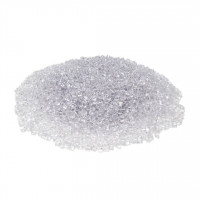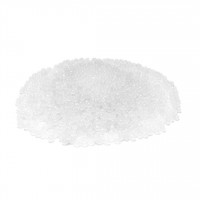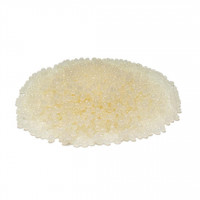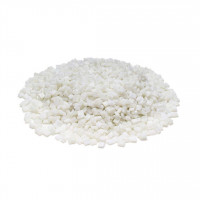
3D pellet printing (FGF - Fused Granular Fabrication) is emerging as one of the most significant developments in additive manufacturing. Formfutura, a Dutch brand already known for its high-quality filaments, now offers a range of pellets designed specifically for 3D printing, with the same formulations as the most popular filaments.
In this article, we explore what pellet printing is, what advantages it offers and why pellets Formfutura are an attractive option for professionals and researchers.
What is 3D pellet printing?
Unlike classic FDM/FFF printing which uses filament wound on a spool, FGF printing uses plastic granules (pellets) as the starting material. The pellets are loaded into a hopper, then a screw pushes them into the melt zone where they are softened and finally extruded through the nozzle, exactly as in industrial injection moulding.
The advantages of pellets over filament
Dramatically lower material cost
Pellets cost a fraction of the equivalent filament. Filament extrusion, winding and packaging account for a significant part of the final cost. By working directly with pellets, you can save up to 90% on material cost.
Superior mechanical properties
When a filament is manufactured, the material undergoes an additional thermal cycle that partially degrades its properties. Pellets, having not undergone this intermediate transformation, retain properties closer to those of the original raw material, approaching the results achievable with injection moulding.
Wider range of materials
Many advanced materials, such as very soft elastomers, compounds with high carbon or glass fibre fillers, and custom formulations for specific applications, are difficult or impossible to convert into filament. Pellets make these materials accessible for 3D printing.
Higher printing speed
Pellet extruders can achieve much higher flow rates than filament extruders, making FGF printing ideal for large parts and mass production.
Pellets Formfutura
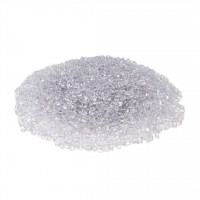
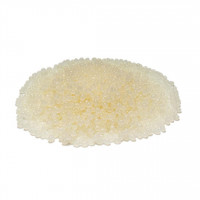
Formfutura offers pellets based on the same formulations as its most popular filaments, including EasyFil PLA, which is available in several colours and carefully reduced to optimum granule size for extrusion. This guarantees the same quality and reliability that users already know from the filament, with all the advantages of the granule format.
Pellet Printing Applications
Pellet printing has applications in many areas: large-format rapid prototyping, tool and mould making, small and medium series end-use parts, materials research and development, circular economy with recycled materials, and industrial applications in the automotive, aerospace and marine sectors.
What you need to get started
To print with pellets, you need a 3D printer equipped with a pellet extruder (with hopper and extrusion screw) or a retrofit extruder to be mounted on an existing printer. Desktop machines with pellet extruders are becoming increasingly affordable, with prices starting at a few thousand euros for entry-level models.
Pellets Formfutura at DHM-online
At DHM-online you will find pellets Formfutura in the section dedicated to 3D printing materials.
If you are considering switching to granule extrusion or are looking for specific materials for your project, the DHM technical team is available to support you in your choice.