Introduction
A poorly chosen linear shaft can seize the bushings, rust within months or wear unevenly and induce vibration. The choice between ground, hardened, chrome plated or hardened-and-chrome-plated is not minor: it drives service life, maintenance cost and motion quality.
In industrial linear motion, the shaft is the guide on which linear bushings or ball bearings slide. The three key properties are surface hardness, corrosion resistance and dimensional tolerance.
This guide compares the four main types and gives a selection matrix by application.
What a precision linear shaft is
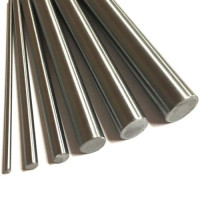
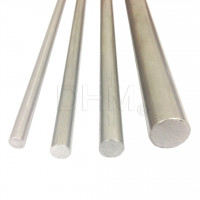
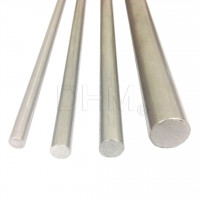
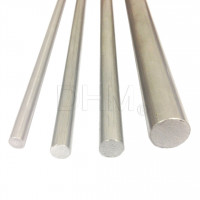
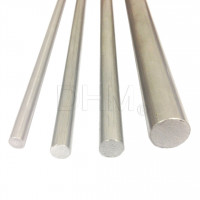
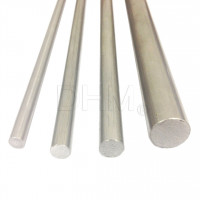
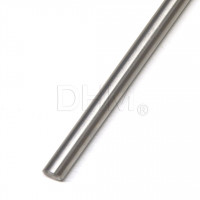
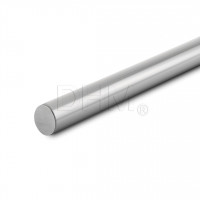
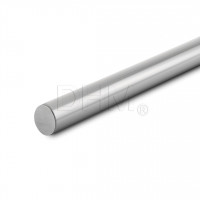
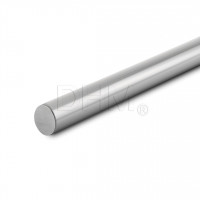
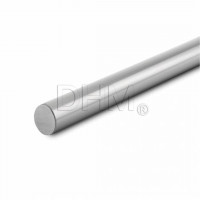
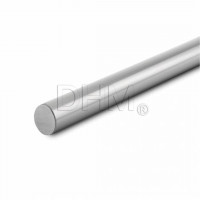
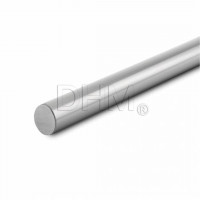
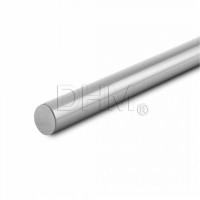
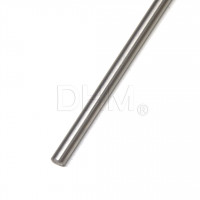
A linear shaft is a cylindrical steel bar machined to tight diameter tolerances and a surface finish that lets bushings or bearings slide without play or excessive friction. Typical tolerances are h6 or h7; nominal diameters follow ISO standard series.
The four main types
• Ground: C45/CF53 steel, ground, no heat treatment
• Hardened: induction-hardened surface (around 58-62 HRC)
• Chrome plated: ground with a hard chrome surface layer
• Hardened and chrome plated: combination of induction hardening and chrome
Technical comparison
|
Type |
Surface hardness |
Corrosion |
Relative cost |
|
Ground |
Low (20-25 HRC) |
Low |
Base |
|
Hardened |
High (58-62 HRC) |
Low |
+ |
|
Chrome plated |
Standard + chrome |
High |
++ |
|
Hardened + chrome |
High + chrome |
High |
+++ |
How to choose by application
Light motion in dry environment
For low-cycle traversers, manual stations or reference jigs, a ground shaft is enough. Low cost and adequate hardness make it optimal where wear is not the critical factor.
High-cycle automation with linear bushings
For Cartesian machines, 3D printers and pick-and-place systems with continuous repeated cycles, a hardened shaft is needed. The 58-62 HRC surface preserves bushing life and system geometry.
Humid, food or outdoor environments
With moisture, washdown or saline atmosphere, a chrome plated shaft is essential. The hard chrome creates a corrosion barrier that an unprotected hardened shaft lacks. For heavy cycles in wet conditions, hardened-and-chrome-plated is the correct choice. Note: chrome plating typically does not cover the cut ends.
Selection matrix
|
Application |
Recommended type |
|
Hobby 3D printer |
Hardened |
|
Industrial 3D printer 24/7 |
Hardened and chrome plated |
|
CNC plotter, laser machine |
Hardened |
|
Food-sector motion |
AISI 316 stainless, ground |
|
Manual station, reference jig |
Ground |
|
Outdoor automation / frequent washdown |
Chrome plated or hardened+chrome |
Mistakes to avoid
• Using ground shafts for high-cycle duty: they score within months
• Using hardened shafts in wet environments unprotected: they rust where the bushings do not cover
• Cutting a chrome plated shaft and leaving the bare core end exposed in a corrosive environment
Standard diameters and tolerances
Typical commercial diameters run from 6 to 50 mm in standard steps. Standard tolerance is h6 for precision and h7 for commercial use. For optimal sliding with linear bushings, the common pairing is shaft h6 and bushing H7.
Case study: industrial 3D printer 24/7
A dental-parts producer ran ten printers in continuous production. The first machines used standard hardened 10 mm shafts. After roughly 18 months, some units showed bushing play and lost first-layer precision. Replacing the shafts with a hardened-and-chrome-plated version and checking the bushings re-set the expected service life on a multi-year horizon under the same duty.
FAQ
What is the difference between hardened and chrome plated shafts?
Hardened gives high surface hardness (58-62 HRC) but low corrosion resistance. Chrome plated gives standard hardness with a hard chrome layer that resists corrosion. They are complementary, not alternatives.
Can I use a chrome plated shaft in food applications?
Generally no: hard chrome is not certified for food contact. The food sector uses ground AISI 316 stainless, which withstands aggressive washdown.
What does h6 tolerance mean?
h6 is an ISO tolerance class describing a small downward deviation from nominal diameter, in the order of micrometres depending on size. A 20 mm h6 shaft, for example, is between 19.987 and 20.000 mm.
Can I order a custom-length shaft?
Yes, online configurators allow cut-to-size to the millimetre on all types, with a typical ±0.5 mm length tolerance.
Conclusion
The choice between ground, hardened and chrome plated is about function, not cost: environment, duty cycle and expected life define the correct type. Ordering shafts cut to size in the right type avoids over-spec and downtime from premature wear.