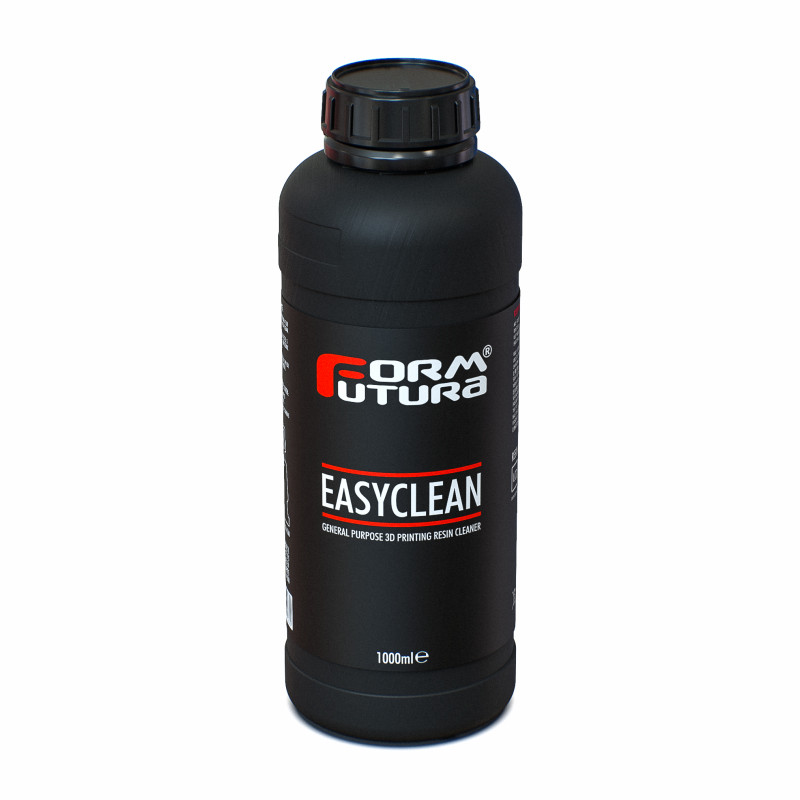
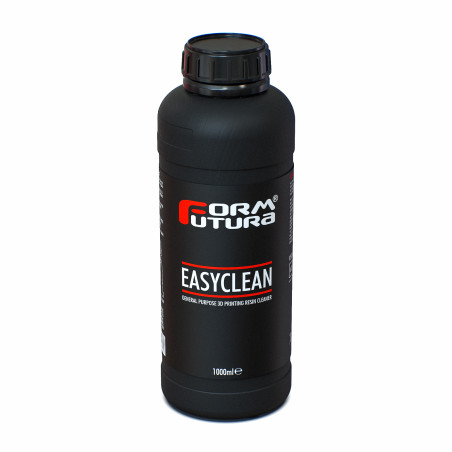
EasyClean resin cleaner is chemically engineered to safely and effectively remove any uncured photopolymer 3D printing resin in the range of 385 ? 420nm from SLA, DLP, or LCD 3D printed objects. EasyClean is made from organic solvents and is safer and more effective than Isopropyl Alcohol (IPA) and can be used roughly 3 times longer than IPA.
Key features Superb cleaning properties Breaks down resin better than IPA and other solutions Doesn't leave any residue, cloudiness, or white haze No sticky prints Compatible with all UV curable resins for SLA, DLP, and LCD 3D printing technologies Compatible for cleaning with magnetic stirrers, ultrasonic cleaners, and washing/curing stations No transport restrictions Not classified as a dangerous good by ADR and IATA Non-flammable Limited odor Can also be used for cleaning build plates, vats, and other surfaces that come in contact with resins Long shelflife up to 24 months How to use Put the resin print in a tub filled with EasyClean resin cleaner Clean for 10-15 minutes when cleaning by hand, or 5 minutes when using an ultrasonic cleaner After cleaning let the printed object dry or rinse with tap water Storage Store EasyClean in a well-ventilated area in its original HDPE bottle, or jerrycan. Make sure the bottle or jerrycan is tightly closed and stored at a temperature below 25°C. When stored properly EasyClean Resin Cleaner has a shelflife up to 24 months.
Qual è il materiale migliore per pezzi che devono stare all'esterno?
L'ASA è il materiale consigliato per l'uso esterno. A differenza dell'ABS, l'ASA è altamente resistente ai raggi UV, non ingiallisce e mantiene le sue proprietà meccaniche anche sotto l'esposizione diretta del sole e degli agenti atmosferici.
Perché la mia stampa in PETG presenta molti "fili" (stringing)?
Il PETG è un materiale molto viscoso. Per ridurre lo stringing, è fondamentale calibrare correttamente la temperatura di stampa e la distanza di ritrazione. Inoltre, assicurati che il filamento sia asciutto, poiché l'umidità assorbita peggiora drasticamente questo fenomeno.
Posso mescolare resine di marche diverse?
In generale è sconsigliato, poiché ogni resina ha tempi di esposizione e composizioni chimiche differenti. Mescolarle potrebbe portare a fallimenti di stampa o a una polimerizzazione incompleta del pezzo.
Come si smaltiscono i residui di resina 3D?
La resina liquida è considerata un rifiuto speciale. Non deve mai essere gettata negli scarichi domestici. È necessario polimerizzare i residui liquidi (esponendoli al sole o a lampade UV) fino a renderli solidi, dopodiché possono essere smaltiti seguendo le normative locali sui rifiuti plastici speciali.