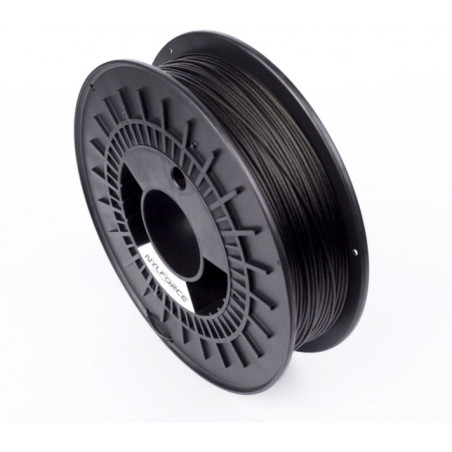
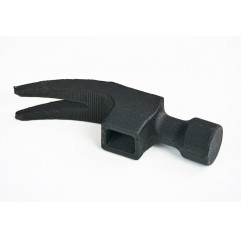
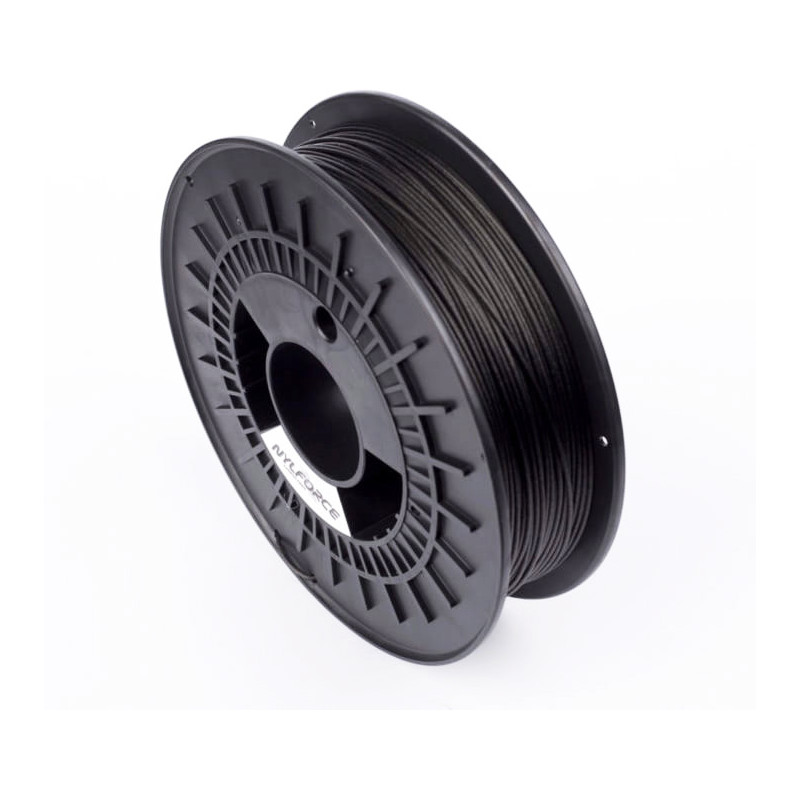
Nylforce Glass fiber filament is made of strong glass fiber reinforced nylon
Nylforce Glass Fiber is a filament from FiberForce, an Italian manufacturer, ideal for technical and mechanical prototype prints.
Maintenance
Before using it, it is necessary to make sure that the material is completely dry. To ensure this, the filament is kept under vacuum with a silica gel bag.
However, in case of humidity, it is necessary to keep it for 6-8 hours at 85-95°C.
Then store in a dry place, preferably in a closed container containing desiccant.
Hot-ends, nozzles and fans
The Nylforce Glass fiber filament is printed at temperatures between 250°C and 265°C.
Before using it, make sure that your hot-end and your machine are able to print this kind of filament. You may consider upgrading your machine to achieve extrusion temperatures above 240°C.
The fibers contained in the filament have an abrasive effect on the nozzle during printing, so it is recommended to use nozzles made of abrasion-resistant material, such as stainless steel or hardened nozzles. Fans are not required.
Adhesion to the Platen
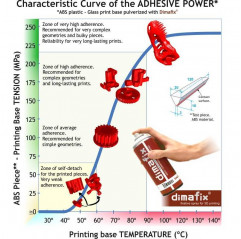
The filament does not adhere well to PEI, BuildTak or similar surfaces. We recommend printing on a heated (60-70 °C) glass-top surface and using specific adhesives.
Precautions
An important feature of Nylforce Glass Fiber is the fibers inside. In addition to reducing moisture absorption, they keep the printed object dimensionally stable and reduce the rate of shrinkage during printing.
Remember: Nylon filaments can be printed at lower temperatures than those indicated, but the printed parts are then fragile if not printed at sufficiently high temperatures.
So pay attention to the temperature!
Qual è il materiale migliore per pezzi che devono stare all'esterno?
L'ASA è il materiale consigliato per l'uso esterno. A differenza dell'ABS, l'ASA è altamente resistente ai raggi UV, non ingiallisce e mantiene le sue proprietà meccaniche anche sotto l'esposizione diretta del sole e degli agenti atmosferici.
Perché la mia stampa in PETG presenta molti "fili" (stringing)?
Il PETG è un materiale molto viscoso. Per ridurre lo stringing, è fondamentale calibrare correttamente la temperatura di stampa e la distanza di ritrazione. Inoltre, assicurati che il filamento sia asciutto, poiché l'umidità assorbita peggiora drasticamente questo fenomeno.
Posso mescolare resine di marche diverse?
In generale è sconsigliato, poiché ogni resina ha tempi di esposizione e composizioni chimiche differenti. Mescolarle potrebbe portare a fallimenti di stampa o a una polimerizzazione incompleta del pezzo.
Come si smaltiscono i residui di resina 3D?
La resina liquida è considerata un rifiuto speciale. Non deve mai essere gettata negli scarichi domestici. È necessario polimerizzare i residui liquidi (esponendoli al sole o a lampade UV) fino a renderli solidi, dopodiché possono essere smaltiti seguendo le normative locali sui rifiuti plastici speciali.