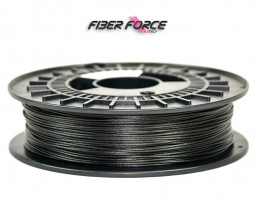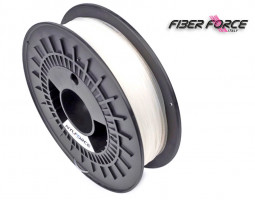
Fibre-reinforced filaments are the bridge between hobbyist 3D printing and engineering applications. The addition of carbon or glass fibres to a polymer matrix radically transforms the mechanical properties of the material, opening the door to lightweight, rigid and dimensionally stable parts.
Carbon fibre vs. glass fibre: differences
Carbon fibres (CF) offer the best stiffness-to-weight ratio available in 3D printing. CF filaments are significantly stiffer, lighter and dimensionally more stable than base materials, with almost zero shrinkage in print. They are ideal for structural parts, drones, automotive components and aerospace applications.
Glass fibres (GF) offer a good increase in stiffness and strength at a lower cost than carbon. They are less abrasive on nozzles than carbon fibres and offer better temperature resistance. They are the optimal choice when a good compromise between performance and cost is needed.
Polymer matrices available
PLA-CF / PLA-GF
Fibre-filled PLA retains the printing ease of basic PLA but gains rigidity and dimensional stability. It is the ideal entry point for those who want to experiment with composites. Thermal resistance remains limited (approx. 60 °C).
PETG-CF / PETG-GF
Reinforced PETG combines the printing ease of PETG with significantly higher rigidity. Excellent for functional parts requiring dimensional stability and moderate heat resistance.
PA-CF / PA-GF (Nylon filled)
Carbon Fibre Reinforced Nylon (PA-CF) is considered the material of choice for 3D printing engineering applications. It offers exceptional stiffness, wear resistance, thermal resistance and dimensional stability. It requires a closed chamber, accurate drying and reinforced nozzles.
PC-CF (Filled Polycarbonate)
Carbon-fibre reinforced polycarbonate is the ultimate in thermal and mechanical resistance. It requires very high temperatures and appropriate equipment, but offers performance close to industrial materials.
Nozzles: the fundamental choice
The fibres contained in composite filaments are highly abrasive and quickly wear out standard brass nozzles. It is essential to use hardened steel, stainless steel or, for maximum performance, ruby or tungsten carbide coated nozzles. At DHM-online you will find reinforced nozzles from brands such as E3D, Slice Engineering, Bondtech and Phaetus, compatible with all major extrusion systems.
Printing tips for composites
Always use reinforced nozzles with a diameter of at least 0.4 mm (better 0.5-0.6 mm to reduce the risk of clogging). Print at moderate speeds to ensure good adhesion between layer. Dry nylon-based filaments thoroughly before printing. Use an appropriate print bed (PEI for PA-CF, glass with glue for PETG-CF). Reduce the cooling fan for nylon- and PC-based materials.
Typical Applications
Composite filaments find application in numerous fields: drones and UAVs (lightweight and rigid parts), automotive and motorsport (structural components), tooling and jigs (dimensional stability), robotics (high-strength mechanical parts), functional engineering prototypes and moulds and production equipment.
Composite filaments at DHM-online
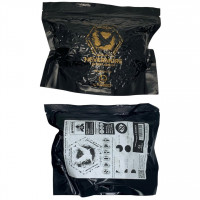
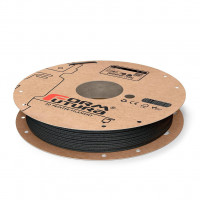
On DHM-online you will find a wide selection of fibre-filled filaments from the best manufacturers: Formfutura (Carbon Fill, Stone Fill, MetalFill), ColorFabb (PA-CF, Specials), TreeD Filaments (Carbon Fiber), 3DXTech (Carbon, Glass Fiber, ESD-Safe), Lehvoss (Luvocom Carbon), DSM (Novamid CF10) and many others. Each product is accompanied by a complete data sheet with recommended printing parameters.