
Please note that our offices will be closed from May 29th to June 2nd. Orders placed after 12:00 PM on Thursday, May 28th will be processed starting Wednesday, June 3rd.
assistant_photo
Worldwide express shipping
Menu
- My DHM
- +Products
- +Mechanical components
- +Profiles structural and accessories
- +Hardware and Screws
- +Industrial material
- +Robotics and Automation
- Motor driver
- Relays and switches
- Power supplies
- Modules and card expansions
- Fans
- Parts for cards
- Control cards
- Arduino boards
- Integrated computers and development boards
- Spies and warning lights
- Duet 3D
- Arduino compatible
- Optoelectronics
- Passive components
- Thermal management
- Video surveillance
- Sensors
- Batteries and Chargers
- Semiconductors
- PCB Prototyping
- Motors
- Data storage and connectivity
- CNC Machines
- +Electrical equipment
- +Extruder group - 3D printing
- +Print bed - 3D print
- +Filaments and 3D Resins
- PLA
- Special PLA
- Loaded
- PETG
- Co-polyesters
- PP - Polypropylene
- Eraser
- PA - Polyamide
- ASA
- ABS
- Special ABS
- PC - Polycarbonate
- PVA and supports
- HIPS
- SKIN contact
- PEI - Polyetherimide
- PMMA
- PPSF & PSU - Polyphenylsulfone
- Accessories - filaments
- PELLETS
- Resins
- Brands Filaments and 3D Resins
- PEKK & PEEK
- PE - Polyethylene
- PVDF - Polyvinylidene fluoride
- ESD-Safe
- PACKS
- +3D printers
- +Tailor-made workings and kits
- Gift Cards
- CLEARANCE
- Manufacturers
- DHM online services
- New Products
- Prices Drop
- My Projects
- Blog
- Contact Us
- Help
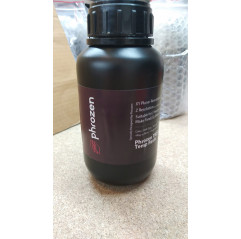
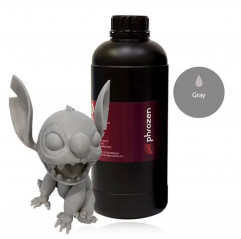
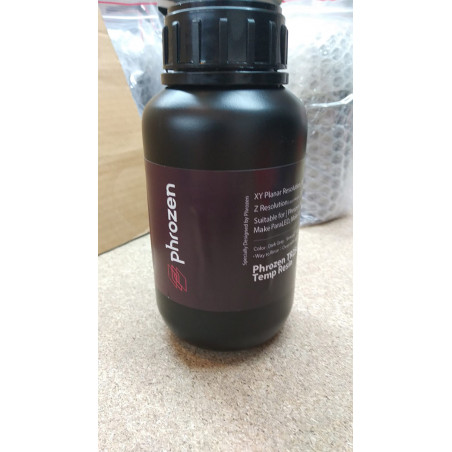
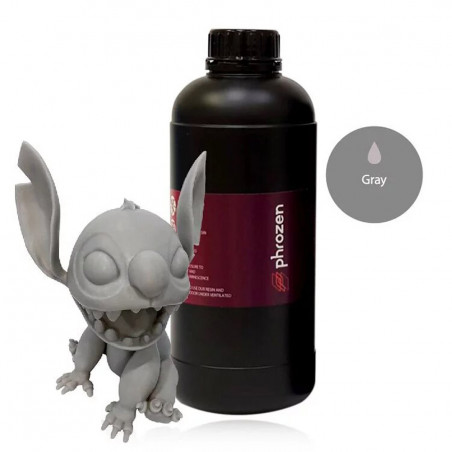
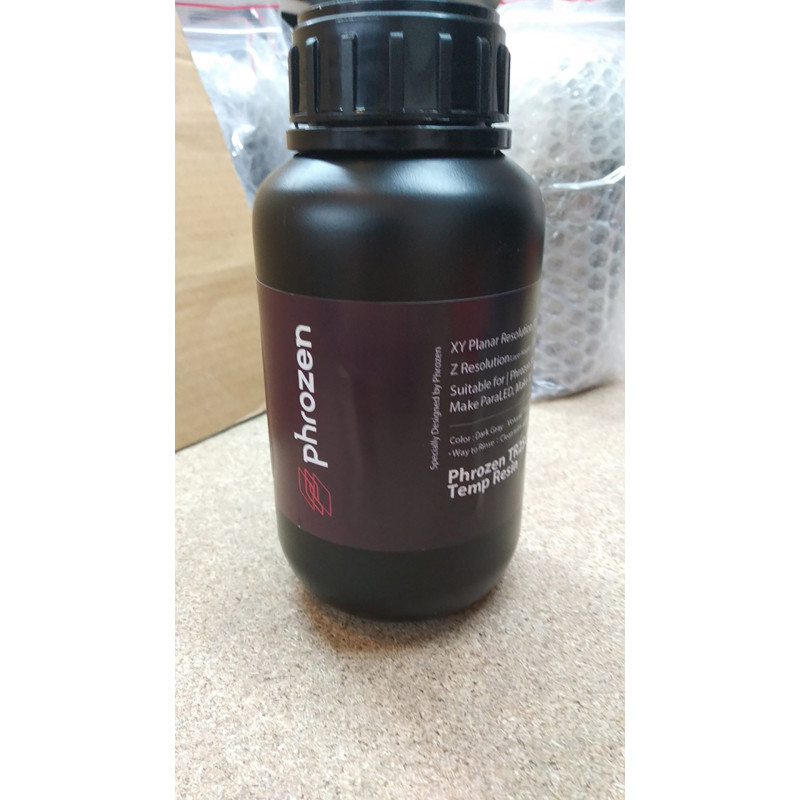
Phrozen Resin TR250LV (1KG)

19420019
€95.23
Added to your Project
Removed from your Project
VAT included
Shipping excluded
Currently not available- Product Details19420019-- Stocks: Immediate Availability **Regular shipments throughout the country
Specific References
- EAN13
- 9508724664757
- DescriptionPhrozen TR250LV is an excellent resin for engineering parts and thermoforming (dental) applications that need to absorb some heat. It can withstand temperatures above 150°C.
Features Phrozen TR250LV:
Contents: 1KG
XY planar resolution: 47 microns
Z resolution (level height): 30-100um
Normal level time: 15 sec @ 50 um
Properties: High hardness, toughness and resolution.
Ways to rinse: clean with alcohol spray with air gun
Suitable for: LCD 3D printer
Application: rubber mold for jewelry, GK kit for fine details, heat resistance application
Color: dark gray
Low viscosity
Heat resistant up to 150°C
Specifications:
Viscosity: 610cPa?s?25?
Density: 1.10 g/cm3
Tensile stress (breakage): 68 Mpa
Tensile modulus: 1050 Mpa
Hardness: Shore 80D
Elongation: 8.5 %
Breaking value: 25 Mpa
Heat deflection temperature @0.45MPa: > 150°C
Instructions for use:
We suggest to use the resin and the printer indoors in ventilated conditions.
Avoid exposure to sunlight and indoor luminescence.
Please store resin in a closed opaque bottle to avoid exposure to air.
Do not mix used and unused resin together.
Please keep resin away from children.
Do not discharge the resin. Please cure the resin and treat/recycle it as general plastic garbage.
Safety rules:
Do not eat or swallow the resin. Go to the hospital if necessary.
Wear goggles to avoid eye contact with resin. Wash your eyes with water and go to the hospital if necessary.
Resin may cause mild skin irritation. Wear gloves when handling.
Stop using if an allergy has occurred.
The resin has a slight odor. We strongly advise you to use it in ventilated conditions.
Recommended safety equipment: gloves, mask, goggles and lab coat.
Store the resin at room temperature (15 ? 35°C) and in dry conditions. - Questions(FAQs)
L'ASA è il materiale consigliato per l'uso esterno. A differenza dell'ABS, l'ASA è altamente resistente ai raggi UV, non ingiallisce e mantiene le sue proprietà meccaniche anche sotto l'esposizione diretta del sole e degli agenti atmosferici.
Il PETG è un materiale molto viscoso. Per ridurre lo stringing, è fondamentale calibrare correttamente la temperatura di stampa e la distanza di ritrazione. Inoltre, assicurati che il filamento sia asciutto, poiché l'umidità assorbita peggiora drasticamente questo fenomeno.
In generale è sconsigliato, poiché ogni resina ha tempi di esposizione e composizioni chimiche differenti. Mescolarle potrebbe portare a fallimenti di stampa o a una polimerizzazione incompleta del pezzo.
La resina liquida è considerata un rifiuto speciale. Non deve mai essere gettata negli scarichi domestici. È necessario polimerizzare i residui liquidi (esponendoli al sole o a lampade UV) fino a renderli solidi, dopodiché possono essere smaltiti seguendo le normative locali sui rifiuti plastici speciali.
4 Similar Products:

€111.12Price
Added to your Project
Removed from your Project

€40.29€50.36Regular price-20% offPrice
Added to your Project
Removed from your Project

€40.29€50.36Regular price-20% offPrice
Added to your Project
Removed from your Project
arrow_back
arrow_forward
- Images