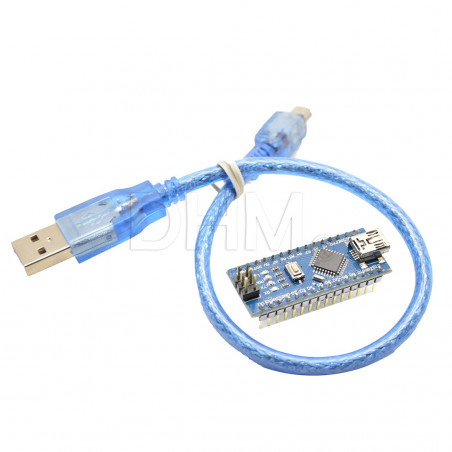
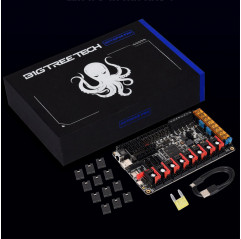
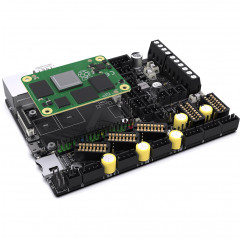
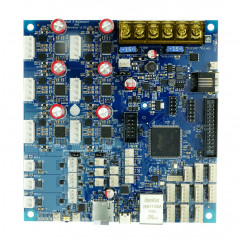
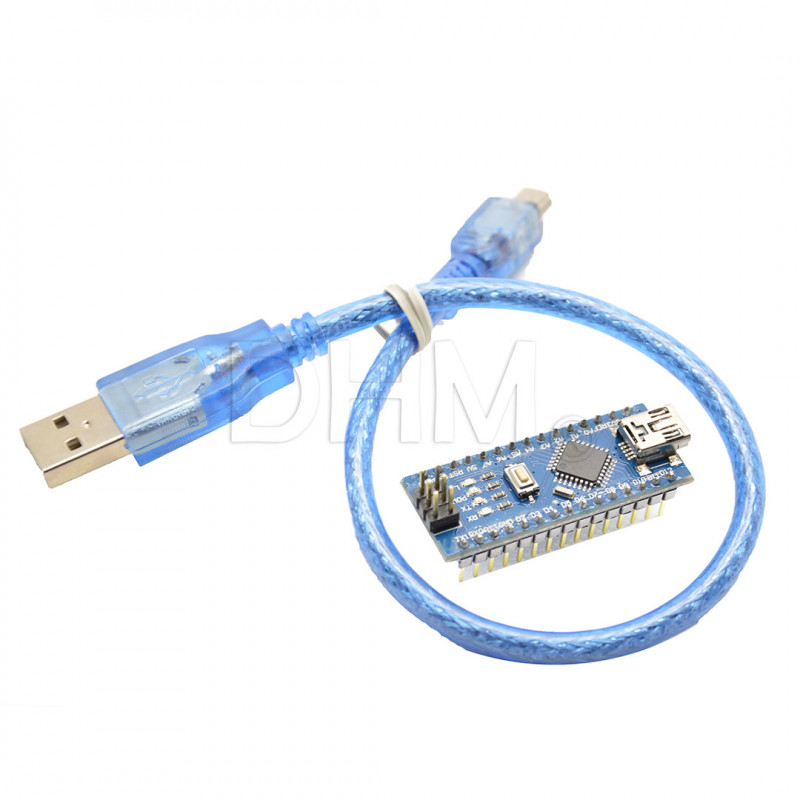
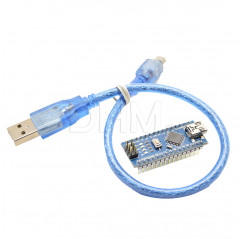
The package contains: 1 x Board NANO with USB cable
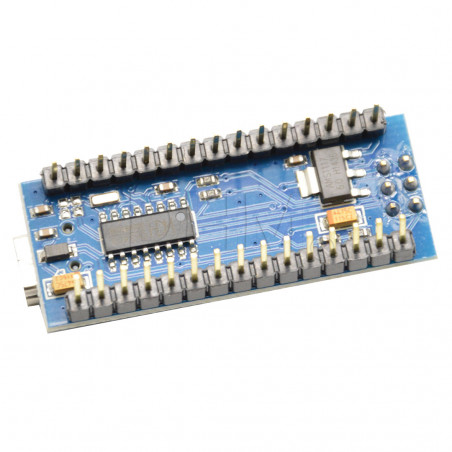
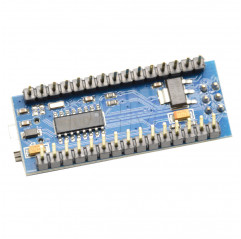
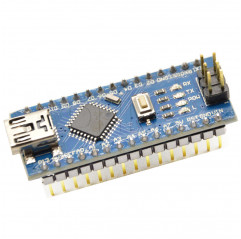
The Arduino Nano 3.3 is a card based on the ATmega328 microcontroller. The Arduino card comes with 14 pin digital inputs / outputs (6 of which can be used as PWM signals), 8 analog inputs, a 16MHz quartz, a Mini-B USB connector, an ICSP programming connector and a pushbutton for resetting the card. The card also provides everything you need to support the operation of the microcontroller. To start using the Arduino Nano 3.3 it is simply necessary to connect the card to a PC via a USB cable or to supply an unregulated external power supply voltage between 6V and 20V by connecting it to pin 30 or supplying a 5V power supply voltage to the pin 27. The power source is automatically selected by choosing the one that provides the highest voltage value.
The card is comparable to the original Arduino, and works with the original drivers.
The item that you can get for certain features differ from the one shown in the photo, depending on the production lot. However, the functionality is retained. The description of this item has been provided by automatic translation. If you have any questions, please do not hesitate to contact us.
Qual è la differenza tra un driver stepper silenzioso e uno standard?
I driver di ultima generazione (come i TMC) utilizzano algoritmi avanzati per gestire la corrente del motore, riducendo drasticamente il rumore e le vibrazioni durante il movimento. Questo non solo rende la macchina più silenziosa, ma migliora anche la qualità della superficie nei lavori di stampa 3D o fresatura.
Posso utilizzare le vostre schede di controllo per costruire una macchina CNC personalizzata?
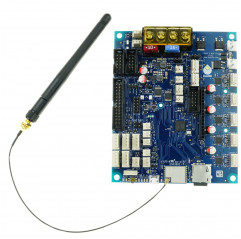
Certamente. Le nostre schede sono compatibili con i firmware più diffusi (come Marlin, GRBL o RepRapFirmware) e possono essere configurate per gestire diversi tipi di cinematica, come assi cartesiani, Delta o CoreXY.
Come posso proteggere l'elettronica di controllo dai disturbi elettromagnetici?
In un ambiente industriale, è fondamentale utilizzare cavi schermati, dissipatori di calore sui driver e alloggiare le schede in case metallici messi a terra. Molti dei nostri componenti sono già progettati con filtri integrati per minimizzare le interferenze.