Volume discounts
| Quantity | Price |
|---|---|
| 2 | €23.70 |
| 6 | €22.45 |
Worldwide express shipping
Volume discounts
| Quantity | Price |
|---|---|
| 2 | €23.70 |
| 6 | €22.45 |
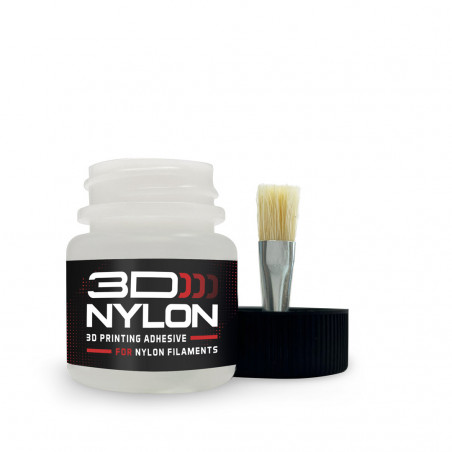
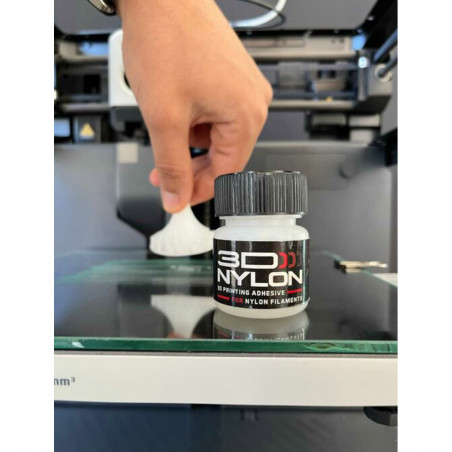
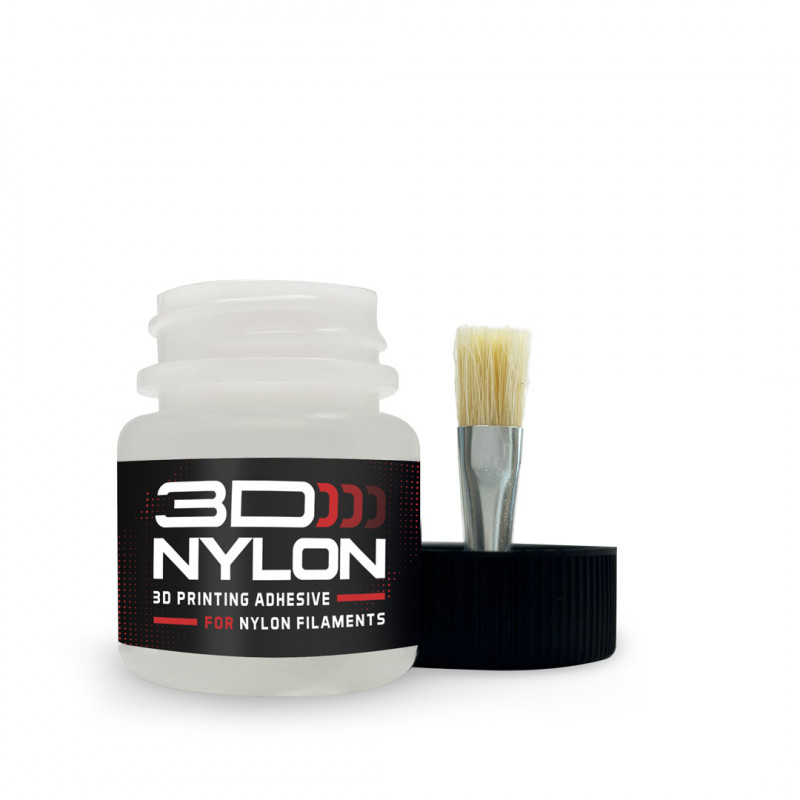
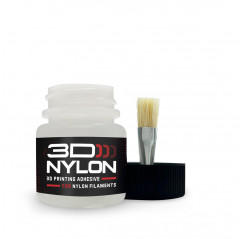
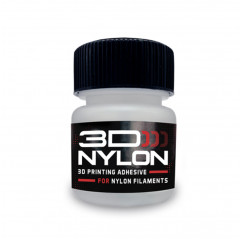
3DNYLON, unveiled at the Formnext 2023 exhibition, is a new printbed adhesive produced by 3DLAC.
It was designed by the team at 3DLAC specifically to perfectly adhere nylon filaments (so-called PA - polyamide filaments) to the working plane of 3D prints.
It not only ensures accurate and high-quality printing, but goes beyond that with its unique features.
DEFORMATION PREVENTION WITH 3DNYLON
Helps prevent warping (warping), a common problem in 3D printing with nylon (polyamide filaments), which means printed parts are less likely to warp or curl during the printing process.
EXCELLENT ADHESION
Provides exceptional adhesion between the nylon filament and the print bed, ensuring that the layers remain firmly bonded throughout the printing process.
IMPROVES PRINTING ACCURACY
This high-quality adhesive improves the adhesion of nylon filaments to the print bed, this also means uniformity of layer along the walls of printed objects. Prints will be more accurate and detailed, very suitable for projects that require high precision for example when printing mechanical parts.
EXCEPTIONAL DURABILITY
The high quality that is achieved during the printing phase using 3DNYLON then is also found in the finished components that will be more durable and resistant to breakage.
Unique formulation for high-quality nylon prints
With this product you can experience a new level of excellence in 3D printing with Nylon polymers. Innovation and technology have been harnessed to create a unique solution that improves the quality and accuracy of your nylon prints. This unique formula is designed to deliver exceptional results, ensuring that your creations stand out for precision and durability.
Brush applicator for added convenience
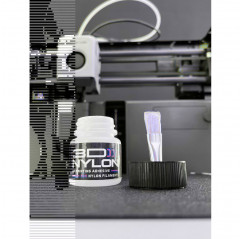
3DNYLON comes with an easy-to-use brush applicator, which makes it easy to apply adhesive precisely and in a controlled manner to the 3D printer's heated platen. This feature ensures even distribution, reduces excess adhesive, and ultimately improves print quality, making it the ideal choice for all 3D printing users.
How to apply 3DNYLON?
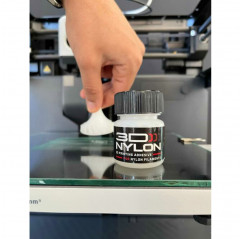
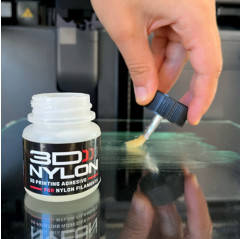
Using the supplied brush, distribute a thin, even layer of product over the affected printing area. The procedure should be performed with the heated platen turned off. Once it has dried you can begin printing.
For more information please contact us.
The item you receive may differ in some features from the one depicted in the photo, depending on the production batch. Despite this, functionality is maintained.
L'ASA è il materiale consigliato per l'uso esterno. A differenza dell'ABS, l'ASA è altamente resistente ai raggi UV, non ingiallisce e mantiene le sue proprietà meccaniche anche sotto l'esposizione diretta del sole e degli agenti atmosferici.
Il PETG è un materiale molto viscoso. Per ridurre lo stringing, è fondamentale calibrare correttamente la temperatura di stampa e la distanza di ritrazione. Inoltre, assicurati che il filamento sia asciutto, poiché l'umidità assorbita peggiora drasticamente questo fenomeno.
In generale è sconsigliato, poiché ogni resina ha tempi di esposizione e composizioni chimiche differenti. Mescolarle potrebbe portare a fallimenti di stampa o a una polimerizzazione incompleta del pezzo.
La resina liquida è considerata un rifiuto speciale. Non deve mai essere gettata negli scarichi domestici. È necessario polimerizzare i residui liquidi (esponendoli al sole o a lampade UV) fino a renderli solidi, dopodiché possono essere smaltiti seguendo le normative locali sui rifiuti plastici speciali.
La piastra normale può presentare curvature invisibili all'occhio ma enormi per l'ugello di una stampante 3D. La piastra 5083 rettificata è lavorata meccanicamente per essere perfettamente piana e distesa termicamente, il che significa che non si "imbarcherà" mai quando la riscaldi a 80-100°C.
No, il tappetino riscaldante deve essere applicato sulla parte inferiore della piastra rigida (alluminio). La superficie magnetica va applicata sulla parte superiore. Il calore passerà attraverso l'alluminio e la base magnetica per scaldare la superficie in PEI o acciaio.
Per mantenere l'adesione al massimo, è sufficiente pulire la superficie con alcool isopropilico (IPA) tra una stampa e l'altra. Se l'adesione cala drasticamente dopo molti utilizzi, un lavaggio con acqua tiepida e sapone neutro per piatti aiuterà a rimuovere i residui grassi delle dita.
Non è obbligatorio, ma è caldamente consigliato. L'isolamento riduce i tempi di riscaldamento del 30-50% e mantiene la temperatura molto più stabile, evitando che il calore residuo interferisca con il funzionamento dei sensori o dei motori situati sotto il piano.