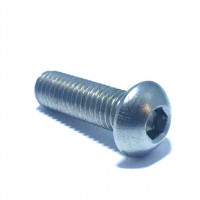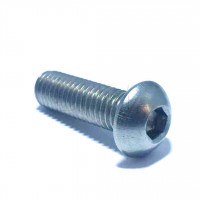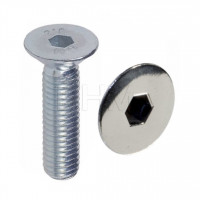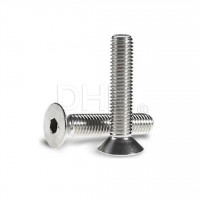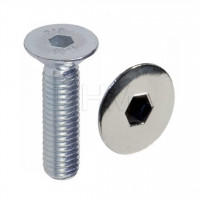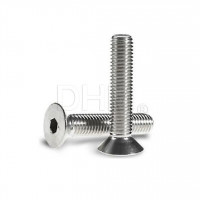
Have you ever noticed the numbers stamped on the head of a screw or bolt? Those numbers (8.8, 10.9, 12.9) are not random codes: they indicate the strength class of the fastener, i.e. its mechanical properties. Choosing the wrong class can mean a joint that fails under load or a waste of budget for unnecessary performance.
How to read the numbers
The classification follows the ISO 898-1 standard. The two numbers separated by the dot indicate: the first number multiplied by 100 gives the minimum tensile strength in MPa (e.g. 8 × 100 = 800 MPa). The product of the two numbers multiplied by 10 gives the minimum yield strength in MPa (e.g. 8 × 8 × 10 = 640 MPa). In practice, the first number indicates the maximum force before failure, the second the ratio of the point at which the material starts to permanently deform to the breaking force.
The most common classes
|
Class |
Breaking (MPa) |
Yield Strength (MPa) |
HRC hardness |
Typical use |
|
4.6 |
400 |
240 |
- |
Light, non-structural fixings |
|
4.8 |
420 |
340 |
- |
General use low load |
|
5.8 |
520 |
420 |
- |
Light carpentry |
|
8.8 |
800 |
640 |
22-32 |
Structures, mechanical engineering, automotive |
|
10.9 |
1040 |
940 |
32-39 |
High strength, high preload |
|
12.9 |
1220 |
1100 |
39-44 |
Maximum performance, aerospace |
Class 8.8: the workhorse
Class 8.8 is the most widely used in general mechanical engineering, automotive and metal construction. It offers an excellent balance between strength and cost. It is the standard choice for fastening motors stepper, linear guides, aluminium profiles and any application where reliable fastening under moderate load is needed.
Class 10.9: when you need more
Class 10.9 offers 30% more strength than 8.8 and is the choice for high preload joints (pre-tensioned bolts), applications subject to dynamic loads and fatigue, structures where safety is critical, and fastenings where the screw diameter must be minimised (stronger for the same size).
Class 12.9: the maximum
Class 12.9 is reserved for the most demanding applications: aerospace, racing, precision machinery. The cost is significantly higher and the availability of measurements is more limited. Only to be used when the structural calculation explicitly requires it.
How to recognise the class
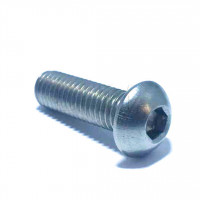
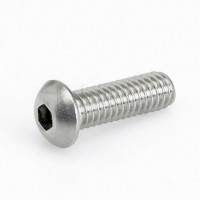
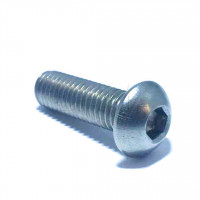
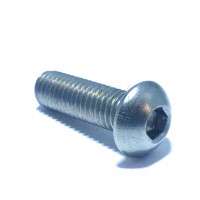
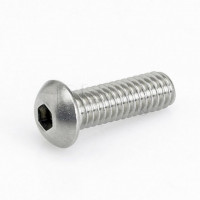
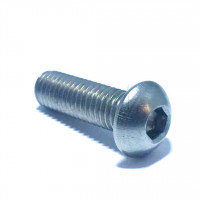
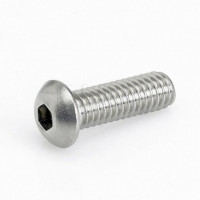
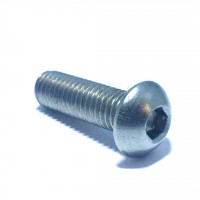
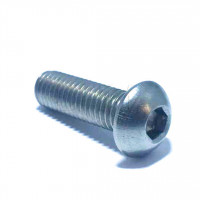
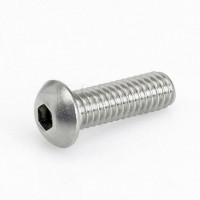
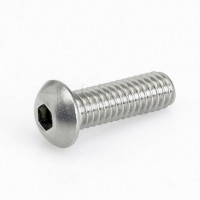
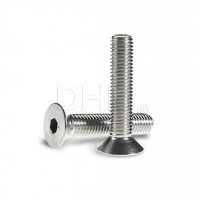
Screws and bolts of class 8.8 and above carry the marking stamped on the head. Screws without marking are typically class 4.6 or 4.8. For hexagon socket (Allen) screws, marking is less common: always check with the supplier.
Screws at DHM-online
At DHM-online you will find hardware in the most commonly used strength classes, in steel and stainless steel, in sizes M2 to M24. The technical team can help you choose the right class for your application.