Please note that our offices will be closed from May 29th to June 2nd. Orders placed after 12:00 PM on Thursday, May 28th will be processed starting Wednesday, June 3rd.
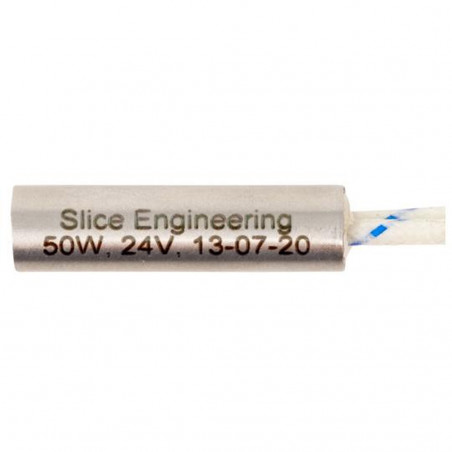
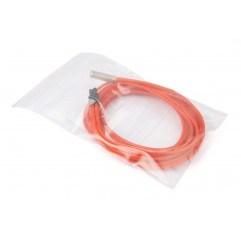
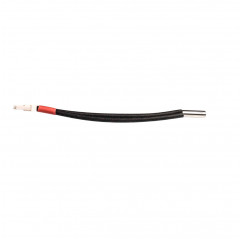
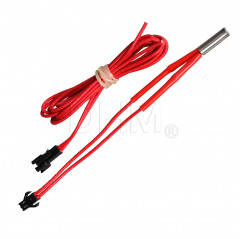
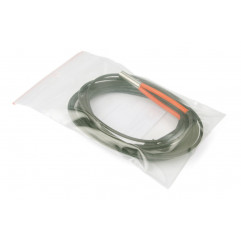
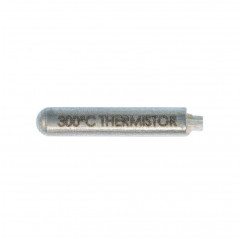
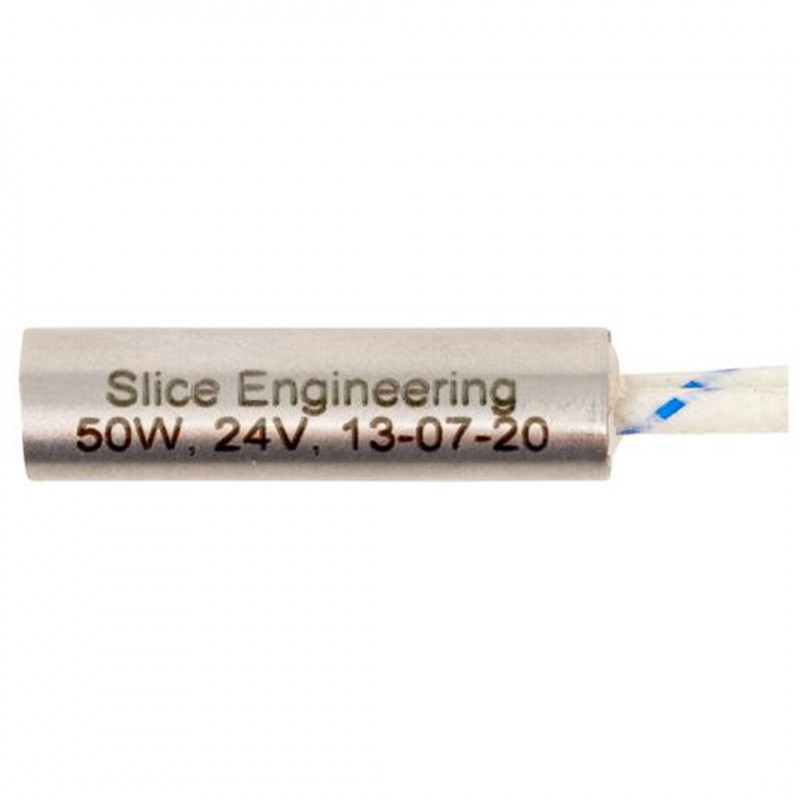
This is an industrial cartridge for 3D printers, suitable for high operating temperatures and designed for continuous operation in an enclosed heated chamber.
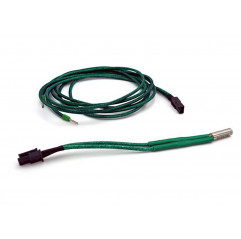
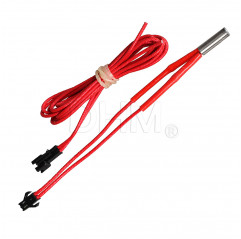
This cartridge from Slice Engineering has internally connected terminal pins ensuring maximum safety and reliability. The conductors are thin with PTFE insulation to ensure maximum flexibility during printer installation and operation. Fiberglass shielding on the first 100 mm of the conductors provides optimal thermal protection.
Key features:
Available with a power rating of 30W 24V and 50W 24V
321 stainless steel cartridge for durability and longevity
Cartridge length 22 mm
Cartridge diameter 6 mm
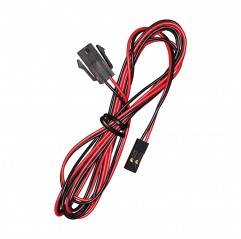
Extra-long 2-m cables reach even the largest printers
Continuous operation in an actively heated environment of 250°C
Package contains: 1 x Industrial Heater - Slice Engineering
For more information please contact us. The item you receive may differ in some features from the one depicted in the photo, depending on the production batch. Despite this, functionality is maintained.
Qual è la differenza tra un estrusore Single Drive e uno Dual Drive?
L'estrusore Single Drive utilizza un solo ingranaggio motorizzato e un cuscinetto a pressione. Il sistema Dual Drive utilizza due ingranaggi controrotanti che afferrano il filamento da entrambi i lati, garantendo una forza di spinta doppia e riducendo drasticamente lo slittamento, specialmente con filamenti tecnici o velocità elevate.
Quando dovrei sostituire l'ugello (nozzle)?
L'ugello va sostituito quando si notano problemi di stampa, specialmente superficiali, o se il diametro del foro si è allargato a causa dell'usura (comune con materiali abrasivi). Un ugello in ottone usato con fibra di carbonio può rovinarsi in poche ore di stampa, mentre uno in acciaio temprato può durare mesi.
Perché il mio estrusore scatta (fa rumore di "clic") durante la stampa?
Il rumore di scatto indica che il motore non riesce a spingere il filamento. Le cause, tra le altre, possono essere un ugello parzialmente ostruito, una temperatura di stampa troppo bassa, o una velocità di estrusione eccessiva per le capacità termiche del tuo hotend, un meccanismo non adeguato al tipo di filamento utilizzato.