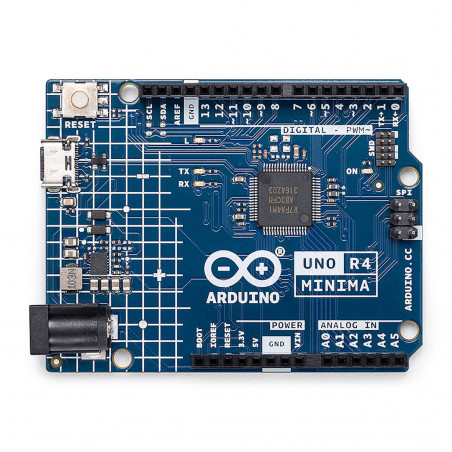
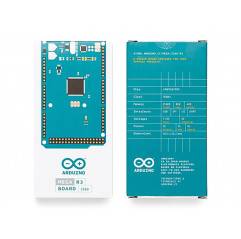
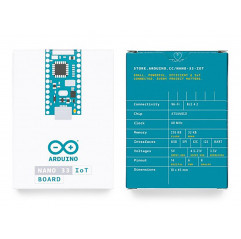
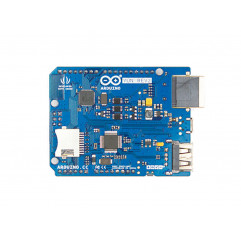
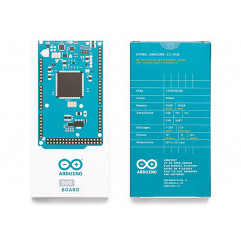
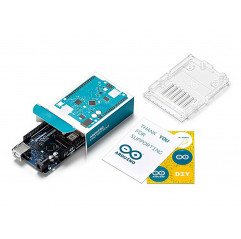
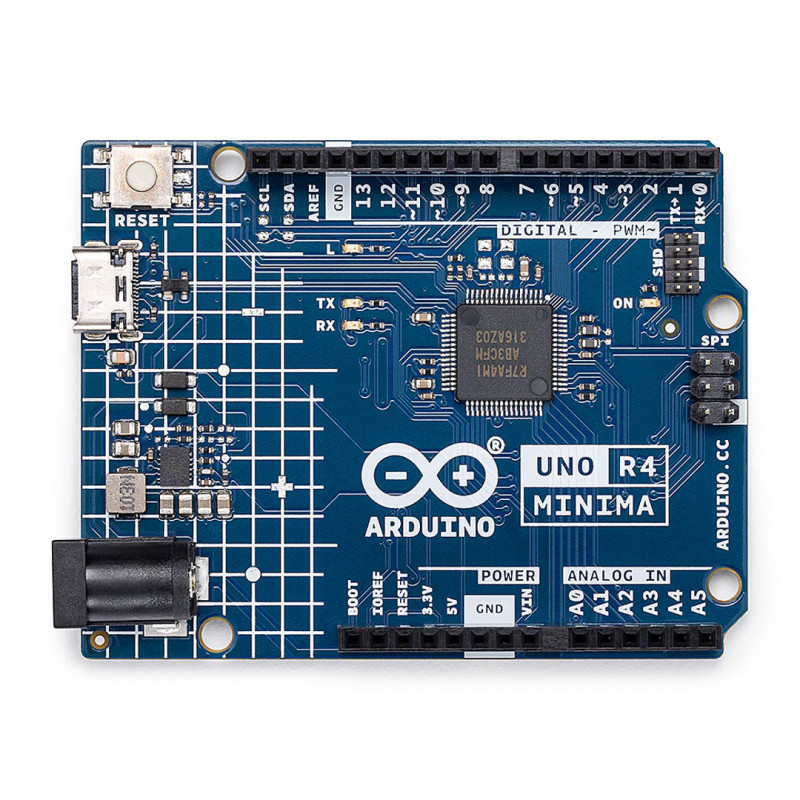
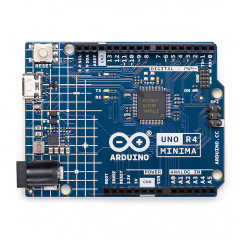
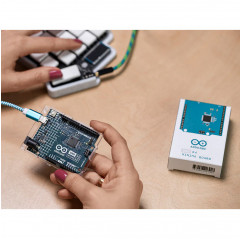
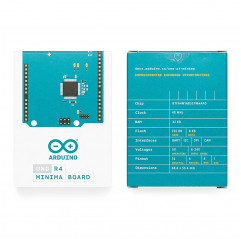
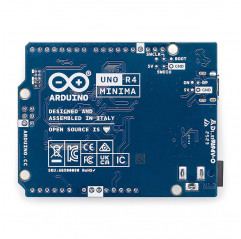
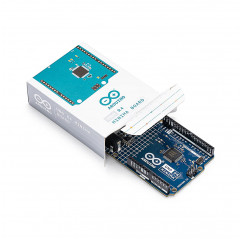
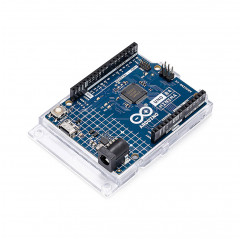
Arduino UNO R4 Minima is equipped with a powerful 32-bit microcontroller provided by Renesas. This allows greater processing power, expanded memory, and a new level of on-board peripherals. Compatibility with existing shields and accessories remains intact, and no changes need to be made to the standard form factor or the 5V operating voltage.
Here is what UNO R4 Minima offers:
Hardware compatibility with the UNO form factor: UNO R4 Minima maintains the same form factor, pinout, and 5V operating voltage as its predecessor, UNO R3. This ensures a seamless transition for existing shields and designs, leveraging the broad and unique ecosystem already established for Arduino UNO.
Expanded memory and faster clock: More accurate calculations and the ability to handle complex designs with ease. The UNO R4 Minima boasts increased memory and faster clock speed, enabling you to tackle the most demanding tasks effortlessly.
Additional on-board peripherals: The UNO R4 Minima introduces a number of on-board peripherals, including a 12-bit DAC, CAN BUS, and OP AMP. These add-ons expand the capabilities and flexibility of designs.
Extension of tolerance to 24V: The UNO R4 Minima now supports a wider input voltage range, allowing power supplies up to 24V. This allows seamless integration with motors, LED strips and other actuators, simplifying designs by using a single power source.
SWD connector: Debugging is a key aspect of any project. Simply connect an external debugger to the UNO R4 Minima to seamlessly monitor the internal workings of the system. Stay in control and gain valuable insights.
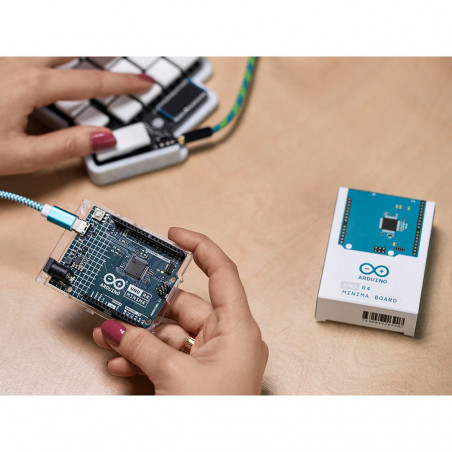
HID support: UNO R4 Minima has built-in Human Interface Device (HID) support, which enables it to simulate a mouse or keyboard when connected to a computer via a USB cable. This convenient feature makes it easy to send keystrokes and mouse movements to the computer, improving usability and functionality.
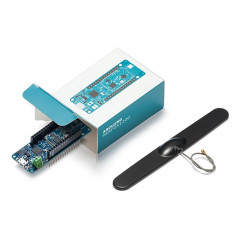
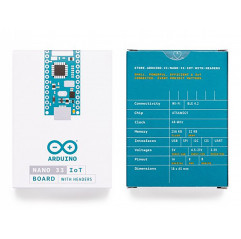
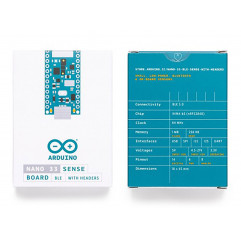
The item you receive may differ in some features from the one depicted in the photo, depending on the production batch. Despite this, functionality is maintained.
Qual è la differenza tra un driver stepper silenzioso e uno standard?
I driver di ultima generazione (come i TMC) utilizzano algoritmi avanzati per gestire la corrente del motore, riducendo drasticamente il rumore e le vibrazioni durante il movimento. Questo non solo rende la macchina più silenziosa, ma migliora anche la qualità della superficie nei lavori di stampa 3D o fresatura.
Posso utilizzare le vostre schede di controllo per costruire una macchina CNC personalizzata?
Certamente. Le nostre schede sono compatibili con i firmware più diffusi (come Marlin, GRBL o RepRapFirmware) e possono essere configurate per gestire diversi tipi di cinematica, come assi cartesiani, Delta o CoreXY.
Come posso proteggere l'elettronica di controllo dai disturbi elettromagnetici?
In un ambiente industriale, è fondamentale utilizzare cavi schermati, dissipatori di calore sui driver e alloggiare le schede in case metallici messi a terra. Molti dei nostri componenti sono già progettati con filtri integrati per minimizzare le interferenze.