In linear motion, the choice between trapezoidal and ball screws is one of the most important decisions. Both convert rotary motion into linear motion, but with very different mechanisms and performance. The wrong choice can mean inaccuracy, vibration, or a waste of budget.
How they work
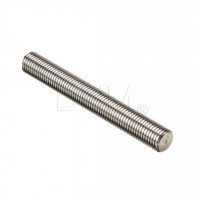
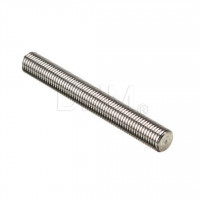
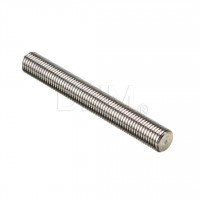
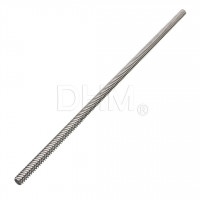
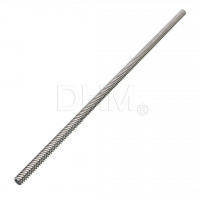
Trapezoidal screw
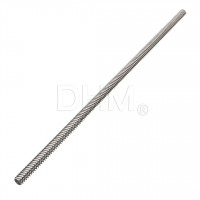
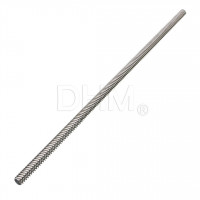
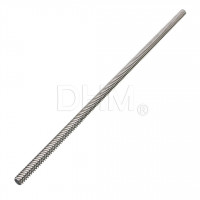
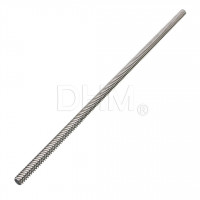
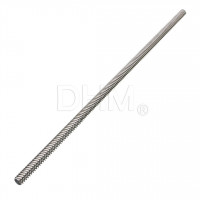
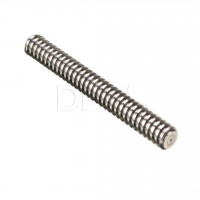
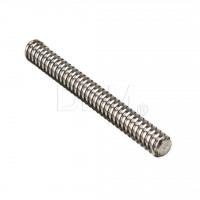
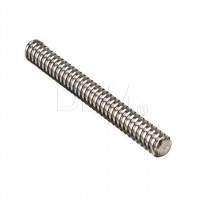
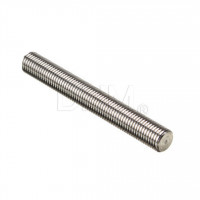
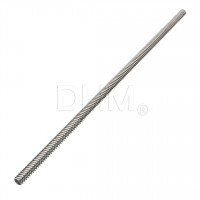
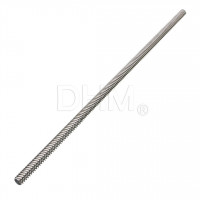
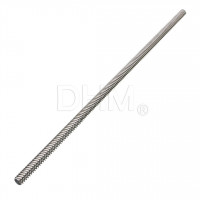
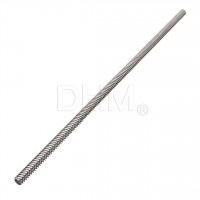
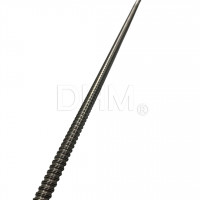
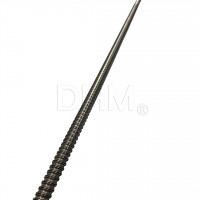
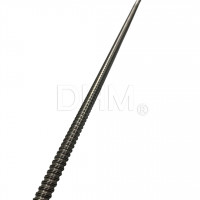
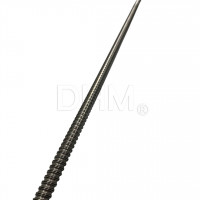
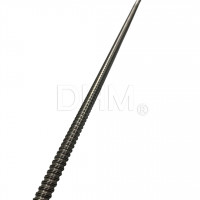
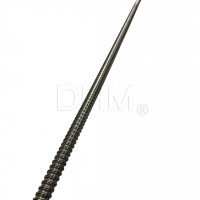
The nut slides directly on the profile of the screw with sliding contact. Friction is relatively high (25-50% efficiency), but the simplicity of construction keeps costs low. The trapezoidal profile offers good axial load capacity.
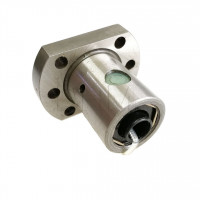
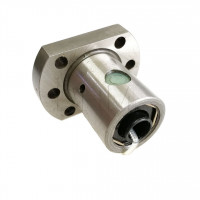
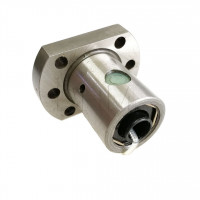
Ball screw
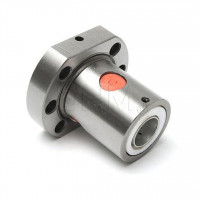
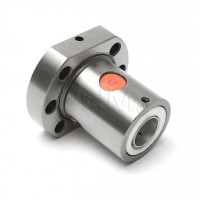
Between the screw and nut are balls that roll in precision channels, just like in a ball bearing. Friction is drastically reduced (90-95% efficiency). The balls recirculate through a return channel in the nut.
Comparison table
|
Feature |
Trapezoidal |
Ball recirculation |
|
Efficiency |
25-50% |
90-95% |
|
Friction |
High (sliding) |
Low (rolling) |
|
Backlash |
Present (can be eliminated with backlash preventer) |
Minimum (preloadable) |
|
Accuracy |
Good |
Excellent |
|
Max. speed |
Moderate |
High |
|
Noise |
Low |
Medium (balls) |
|
Self-locking |
Yes (low pitch) |
No (brake needed) |
|
Maintenance |
Minimum |
Periodic lubrication |
|
Cost |
Low |
High (3-10x) |
|
Durability |
Good |
Excellent |
When to choose the trapezoidal
The trapezoidal screw is the right choice for the Z-axis of 3D printers (low speed, light load, self-locking prevents platters from falling off), hobbyist CNCs where budgets are limited, applications where self-locking is desired (vertical axes without brakes), manual and control systems, and prototypes and projects where maximum precision is not critical.
When to choose the recirculating ball screw
Recirculating ballscrews are needed for CNCs that need to mill with precision (aluminium, steel), high-speed and/or high-frequency direction change applications, machines where energy efficiency is important (less torque required from the motor), and industrial systems with high durability and repeatability requirements.
Screws and nuts at DHM-online
On DHM-online you will find Tr8, Tr10 and Tr12 trapezoidal screws with standard and anti-backlash nuts, and SFU1204, SFU1605 and SFU2005 ball screws with preloaded nuts. Also available: BK/BF and FK/FF bearing units, flexible couplings and motors stepper. The DHM technical team is available to help you size the right drive for your project.
Trapezoidal vs Recirculating Ball Screws: A guide to choice
1. What is the main difference in the operating mechanism?
The main difference lies in the type of contact: the trapezoidal screw works by sliding (sliding friction), where the nut rubs directly on the threads of the screw; the recirculating ball screw works by rolling (rolling friction), using steel balls that drastically reduce resistance. This distinction results in a much higher energy efficiency for recirculating screws ($>90\%$), which require less powerful motors to move the same load.
2. Why are trapezoidal screws often preferred for the Z-axis of 3D printers?
The main advantage is the self-locking property. Thanks to the inherent friction of the trapezoidal profile, especially in short pitches (such as Tr8x2), the Z-axis remains in position even when the motors are not powered. Ballscrews, having very little friction, are not self-locking: without a motor brake, the weight of the platter or extruder would cause them to rotate downwards by gravity when the machine is switched off.
3. What is backlash and how is it handled in the two systems?
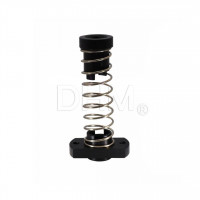
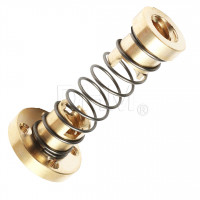
Backlash is the axial play between screw and nut that is felt when changing direction. In trapezoidal screws it is present as standard and can only be reduced with special spring-loaded anti-backlash nuts. In ball screws, backlash is natively minimal due to the precision of the balls and can be virtually eliminated by preloading the balls themselves, making them indispensable for CNC machining on metals where millimetre accuracy is vital.
4. Which screw to choose for a professional CNC?
For a CNC machine intended for machining hard materials or at high speed, the ball screw (such as the SFU1605) is the obvious choice. It offers superior wear life, does not suffer from overheating during long working cycles and guarantees constant positioning accuracy over time. The trapezoidal screw remains a viable solution only for 'light' hobbyist CNCs or where budget is the main driver choice.
5. What maintenance do these drive systems require?
While the trapezoidal screw is more tolerant to dirt and requires periodic lubrication with simple lithium grease, the ball screw is much more sensitive to dust and swarf, which could damage the internal balls. It is essential to use dust covers on the nuts and to keep the recirculation channels clean and lubricated with specific oils. At DHM-online you can find both screws and complete BK/BF and FK/FF support kits for professional installation.