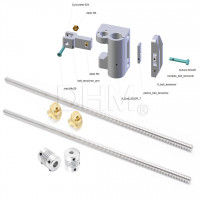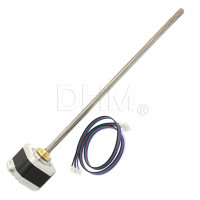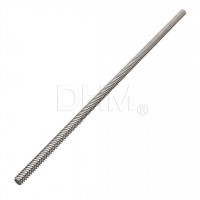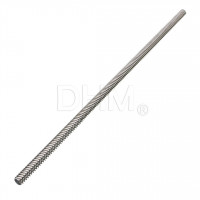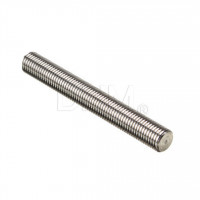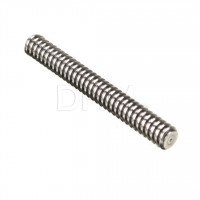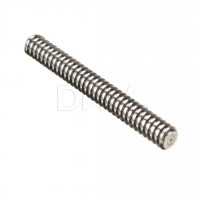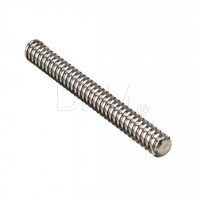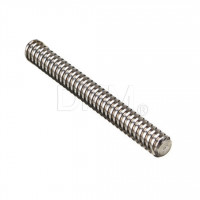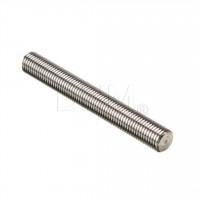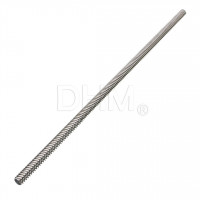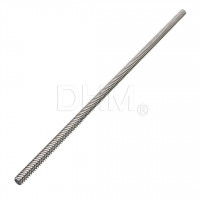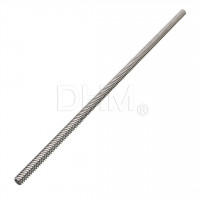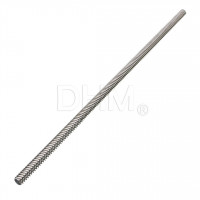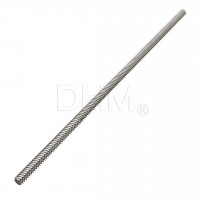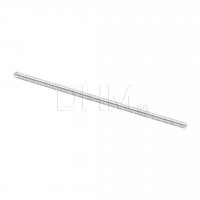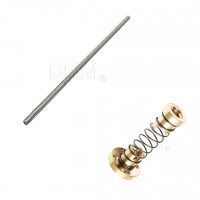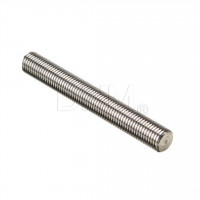
Trapezoidal screws are the most popular drive system for the Z-axis of 3D printers and the axes of hobbyist CNCs. Unlike standard metric threads (triangular profile), the trapezoidal profile is specifically designed to convert rotary motion into linear motion with low friction and good load capacity.
How a trapezoidal screw works
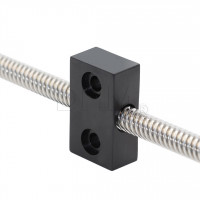
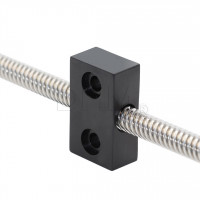
The trapezoidal screw works in tandem with a nut (or lead nut). When the screw rotates, the nut moves along the axis of the screw. The distance travelled in one complete revolution depends on the pitch (lead): a pitch of 8 mm means that the nut advances 8 mm per revolution of the screw.
Pitch (lead) vs. thread pitch (pitch)
It is essential to distinguish between lead (feed per revolution) and pitch (distance between two consecutive threads). For example, a Tr8x8 screw has a diameter of 8 mm and a lead of 8 mm, but if it has 4 leads (threads wound in parallel), the actual pitch of each thread is 2 mm. A Tr8x2 has the same diameter but a lead of only 2 mm (single start), so it advances 4 times slower per revolution, but with 4 times more force and precision.
Which pitch to choose
|
Screw |
Lead |
Principles |
Speed |
Accuracy |
Typical Application |
|
Tr8x2 |
2 mm/revolution |
1 |
Low |
High |
3D printer Z-axis (most commonly used) |
|
Tr8x4 |
4 mm/revolution |
2 |
Medium |
Medium |
Lightweight CNC Z-axis |
|
Tr8x8 |
8 mm/revolution |
4 |
High |
Low |
Fast handling, low force |
|
Tr10x2 |
2 mm/revolution |
1 |
Low |
High |
CNC precision |
|
Tr10x10 |
10 mm/revolution |
5 |
High |
Low |
Fast handling |
|
Tr12x3 |
3 mm/revolution |
1 |
Low |
High |
Medium CNC, high loads |
Nuts: standard and anti-backlash
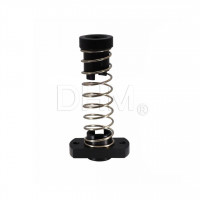
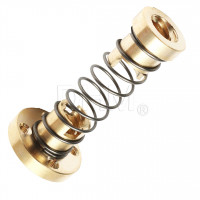
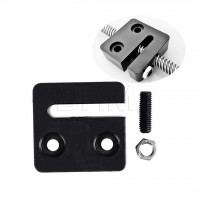
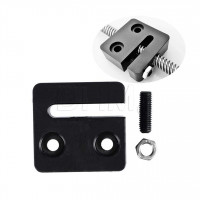
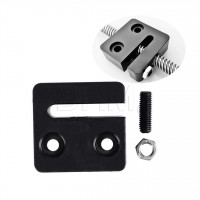
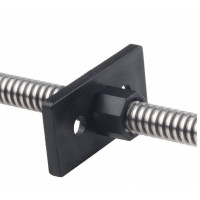
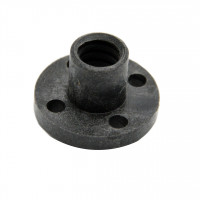
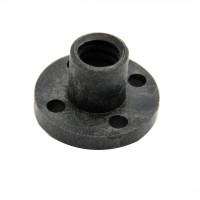
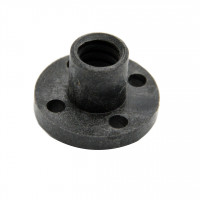
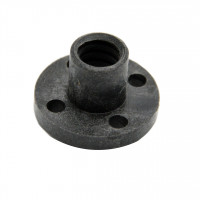
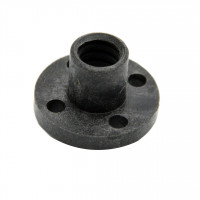
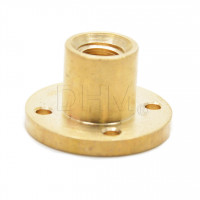
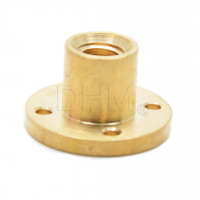
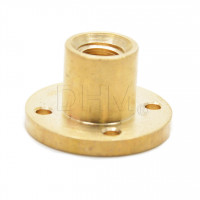
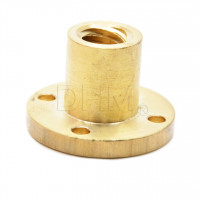
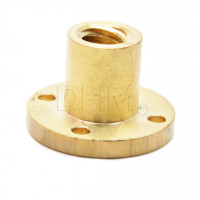
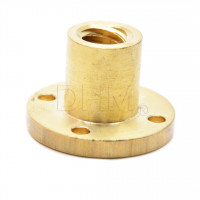
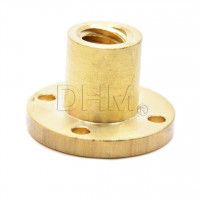
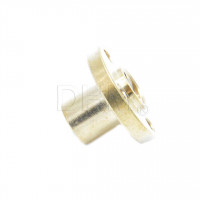
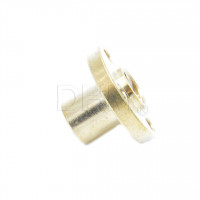
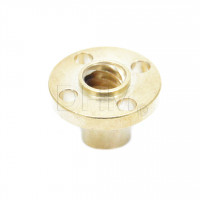
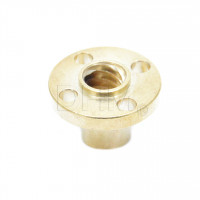
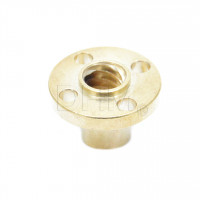
The standard brass or bronze nut is economical and suitable for most applications. It has an inherent play between screw and nut that results in a slight backlash when changing direction. The backlash-free nut uses a spring-loaded or preloaded system that eliminates backlash, ensuring accurate and repeatable positioning. It is the recommended choice for CNC and applications where bi-directional accuracy is critical.
Materials
Trapezoidal screws are available in carbon steel (the standard, good strength-to-cost ratio) and stainless steel (for corrosive environments). Nuts are typically made of brass, bronze or polymer (POM). The steel-brass coupling offers good tribological properties and long life with periodic lubrication.
Installation tips
Couple the trapezoidal screw with a flexible coupling to the motor stepper to compensate for any misalignment. Fit support units (type KP or KFL) at the ends of the screw to ensure alignment. Lubricate with lithium grease every 3-6 months. For the Z-axis of 3D printers, make sure the screw is perfectly vertical to avoid binding.
Trapezoidal screws at DHM-online
At DHM-online you will find Tr8, Tr10 and Tr12 trapezoid screws in different lengths and pitches, with cut-to-length available. Also available: standard and anti-backlash nuts, flexible couplings, support units and motors stepper NEMA 17. Everything you need to build a complete linear axis.
FAQ: Guide to trapezoidal screws for 3D and CNC printing
1. What is the difference between Lead and Pitch in trapezoidal screws?
Pitch is the distance between the ridges of two adjacent threads, while Lead is the linear distance travelled by the nut after a complete 360 degree turn of the screw. In a single-principle screw, such as Tr8x2, Lead and Pitch coincide (2 mm). In multi-principle screws, such as the Tr8x8 (4 principles), Lead is equal to Pitch multiplied by the number of principles ($2 \text{ mm} \times 4 = 8 \text{ mm}$), allowing much faster movements.
2. Trapezoidal screw Tr8x2 or Tr8x8: Which one to choose for the Z-axis?
For the Z-axis of a 3D printer, the Tr8x2 screw is usually the best choice as it offers higher resolution and prevents the axis from descending by gravity when the motors are off (self-locking). The Tr8x8 screw is preferable for axes that require high travel speed, but requires higher torque motors and a specific braking system or nuts to prevent accidental platter or extruder falls.
3. How to eliminate backlash in linear drives?
Mechanical backlash between screw and nut can be eliminated by using an anti-backlash nut. This component, usually consisting of two spring-loaded parts, compensates for the gap between the threads by eliminating backlash. It is a key solution for CNC machines and 3D printers where millimetre accuracy and positioning repeatability are essential requirements.
4. What are the advantages of the brass nut over polymer?
Brass or bronze nuts offer superior mechanical strength and better heat dissipation, making them ideal for heavy loads and intensive CNC use. POM (polymer) nuts, on the other hand, are prized for their quietness and self-lubricating properties, making them ideal for domestic 3D printers, although they do require more frequent surface wear checks.
5. How to correctly install a trapezoidal screw on motors NEMA 17?
For correct installation, the acme screw must be connected to the motor shaft via a flexible coupling, which absorbs any minor misalignment between the components. It is advisable to secure the screw with support units such as the KP08 or KFL08 bearings and ensure that the screw is perfectly parallel to the linear guides to avoid "binding" and reduce motor wear stepper.