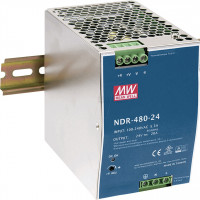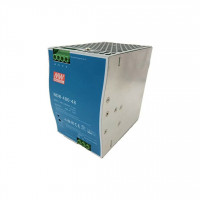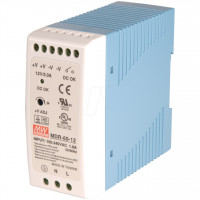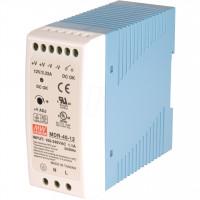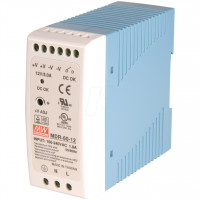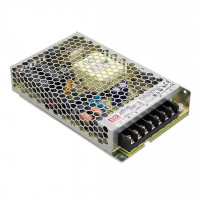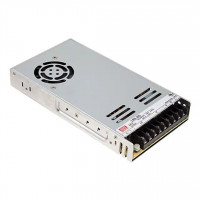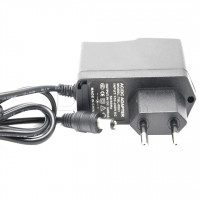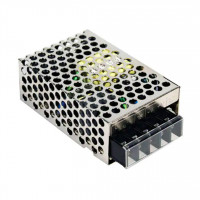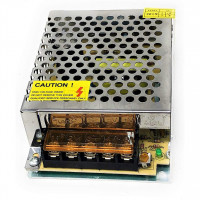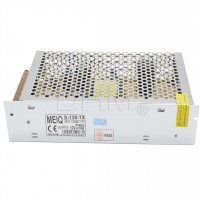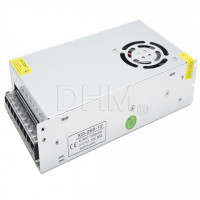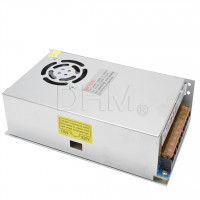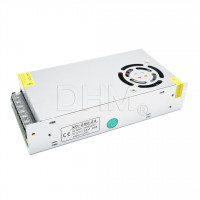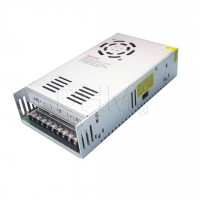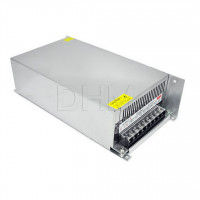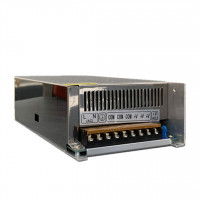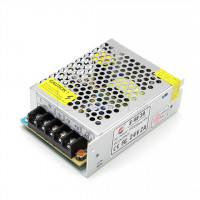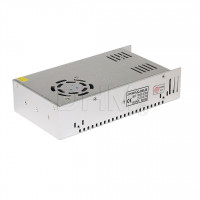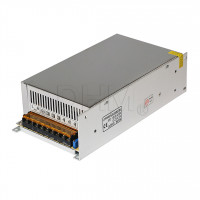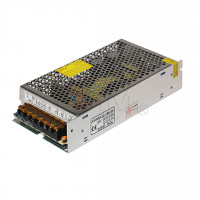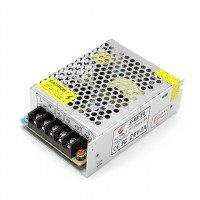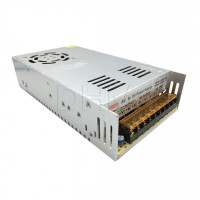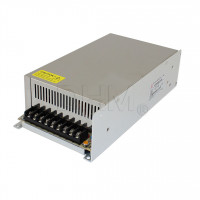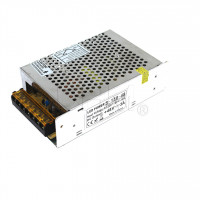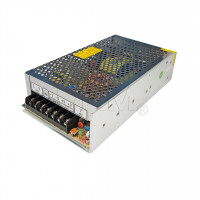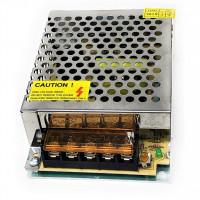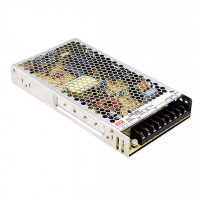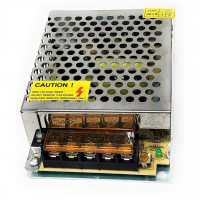
The switching power supply is the component that supplies power to the entire machine: motors, heaters, control board, fans and LEDs. An undersized power supply causes voltage drops, abnormal heating and even damage to components. An oversized one wastes budget with no real benefit. In this guide, we look at how to choose the right voltage and calculate the power required.
Voltage: 12V, 24V or 48V?
12V: the legacy
12V was the standard for early 3D printers (Prusa i3, Anet A8). Today they are largely outdated for printers, but remain in use for LED lighting, some fans and low-power applications. Main disadvantage: high currents for the same power, requiring larger cables and generating more heat in the connectors.
24V: the current standard
24V is now the standard for the vast majority of 3D printers and hobby CNCs. For the same power, the current is half that of 12V, with advantages in terms of efficiency, heat and cable size. Almost all modern boards (Duet3D, BTT, Creality) and driver stepper are designed to operate at 24V.
48V: high performance
48V is used in high-performance machines, CNCs with NEMA 23 motors and automation systems. They allow stepper motors to maintain torque at higher speeds and further reduce currents. They require compatible driver (such as DM542) and more attention to safety.
How to calculate the required power
The calculation of the required power is done by adding up the power consumption of all machine components. The main consumers are the hot plate (the most energy-intensive, typically 150-400W for a 3D printer), the heater ofhotend (30-80W), the motors stepper (5-15W each), the control board (5-15W), the fans (2-10W each) and the LED lighting (5-15W).
As a rule of thumb: add up all consumption and add a margin of 20-30%. For example, for a typical 3D printer with a 24V 200W platter, hotend 50W, 5 motors 10W each and 20W accessories: total 320W + 30% = about 420W. A 450-500W power supply is the correct choice.
Reference table rapido
|
Machine |
Voltage |
Recommended power |
|
Small 3D printer (Ender 3) |
24V |
350W |
|
Medium 3D printer (Voron 2.4) |
24V |
400-500W |
|
Large format 3D printer |
24V |
500-750W |
|
Small CNC hobbyist |
24V |
350-500W |
|
CNC medium (NEMA 23) |
24-48V |
500-750W |
|
Laser cutter |
24V |
200-400W |
Brands and quality: don't skimp on the power supply
The power supply is a safety-critical component. Choosing a certified quality product is not an option. Mean Well is the industry benchmark for reliability, certification (UL, CE, TÜV) and durability. The LRS and RSP series are the most widely used in 3D and CNC printing. Avoid unbranded power supplies or those with dubious certifications: the risk of fire or damage to components is not worth the savings.
Installation tips
Make sure the power supply has adequate ventilation and is not enclosed in a space without air circulation. Use cables with a cross-section suitable for the current: for 24V and 15A, you need at least 1.5 mm² (2.5 mm² is better). Check that all connectors are crimped or soldered correctly: loose connectors are the prime cause of overheating. Always connect to earth. If possible, add a fuse or safety switch on the AC input line.
Power supplies at DHM-online
At DHM-online you will find quality switching power supplies in voltages 5V, 12V, 24V and 48V, with wattages from 15W to over 600W.
The catalogue also includes cables, connectors, fuses, switches and everything needed for a safe and professional installation.