Did the filament burst during printing? Is the surface rough and full of bubbles? Has the strength of the piece collapsed? In all likelihood, moisture is the culprit. Almost all 3D printing filaments are hygroscopic: they absorb moisture from the air and their performance degrades. The solution is drying.
Why moisture is a problem
When a damp filament is heated inhotend, the water trapped in the material evaporates instantly, creating micro-bubbles of vapour in the melt. This causes pops and crackles during extrusion, bubbles and craters on the surface of the print, reduced mechanical strength (up to 30-50%), excessive stringing, and in the worst cases clogging of thehotend.
Which materials are most sensitive
Not all filaments absorb moisture in the same way. Nylon (PA) is the most hygroscopic of all: it can absorb up to 9% of its weight in water and must be dried before each use. PVA, being water-soluble, is extremely sensitive. TPU/TPE absorbs moisture quickly. PETG and PC are moderately hygroscopic. PLA is relatively resistant but still degrades with prolonged moisture. ABS and ASA are the least sensitive.
Temperatures and drying times
|
Material |
Temperature |
Minimum time |
Recommended time |
|
PLA |
45-50 °C |
4 hours |
6-8 hours |
|
PETG |
60-65 °C |
4 hours |
6-8 hours |
|
ABS / ASA |
60-80 °C |
2 hours |
4 hours |
|
Nylon (PA) |
70-80 °C |
6 hours |
12-24 hours |
|
TPU / TPE |
50-55 °C |
4 hours |
6-8 hours |
|
PC |
80-120 °C |
4 hours |
8-12 hours |
|
PVA |
45-50 °C |
4 hours |
6-8 hours |
|
PA-CF / PA-GF |
70-80 °C |
6 hours |
12-24 hours |
Drying methods
Dedicated filament dryer
The best and most practical solution. Filament dryers (such as those integrated in Bambu Lab's AMS, or stand-alone models) maintain a constant, controlled temperature with air circulation. Some allow printing directly from the dryer, keeping the filament dry throughout the print. This is the recommended choice for those who regularly print with hygroscopic materials.
Domestic oven
It works, but with caution. Set the temperature as low as possible and check with a separate thermometer: many ovens have significant temperature fluctuations that can melt or deform the spool. Do not use the ventilated oven at maximum power. Never exceed the glass transition temperature of the material.
Food dryer
An economical alternative that works well for PLA and PETG. Models with temperature control and timer are preferable. The drawback is that the coil may not fit in all models.
Prevention: proper storage
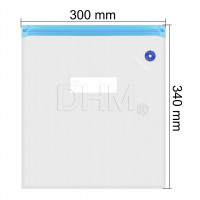
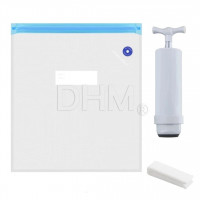
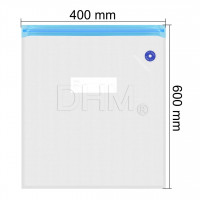
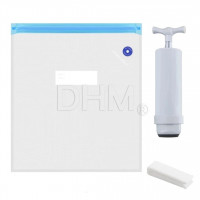
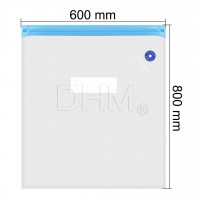
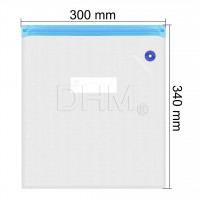
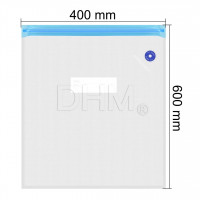
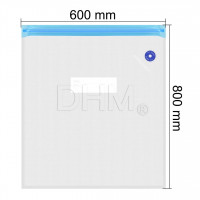
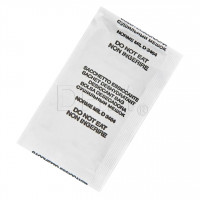
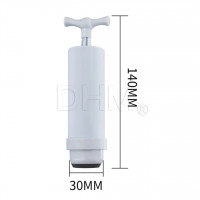
The best strategy is to prevent moisture absorption. Store filaments in vacuum bags with silica gel sachets. Use airtight containers (Cereal Box type) with a hygrometer to monitor humidity. Put the filament back in the bag after each use. For Nylon: dry before each printing session, regardless of storage.
Filaments and accessories at DHM-online
At DHM-online you will find filaments of the best brands and accessories for storage and drying. Have a look at the Filaments section to explore the complete range.
FAQ: Filament drying and storage guide
1. How can I tell if 3D printing filament is wet?
The unmistakable signs of a moisture-contaminated filament are small pops audible during extrusion, a rough surface finish with bubbles or micro-craters and a dramatic increase in filament burrs (stringing). If you notice that the mechanical strength of the part is lower than usual or that the filament breaks easily while being loaded, you should proceed with a drying cycle before resuming printing.
2. Which are the most hygroscopic filaments that require drying?
The most critical material is undoubtedly Nylon (PA), which can absorb moisture within a few hours; this is followed by support filaments such as PVA and flexible materials such as TPU. PETG and Polycarbonate (PC) are also greatly affected by environmental humidity. PLA is more tolerant, but in very humid environments it can degrade and become brittle, making the dryer a useful tool for almost any type of material.
3. Can a domestic oven be used to dry filament?
Yes, but with extreme caution. Home ovens often have temperature fluctuations of more than 10-15°C from the set value, which can cause the material to exceed the glass transition temperature ($T_g$). If the temperature rises too high, the filament coils could melt together or the plastic coil could be irreparably deformed. For safe and repeatable results, it is always preferable to use a dedicated dryer with digital temperature control.
4. How long should the filament stay in the dryer?
Times vary depending on the sensitivity of the polymer and the degree of saturation. In general, for PLA and PETG, 4 to 8 hours at 45-60°C are sufficient. For industrial materials such as Nylon or PA-CF, 12 to 24 hours at higher temperatures (70-80°C) may be necessary. It is essential not to rush: slow and constant drying ensures that moisture is also removed from the core of the reel.
5. What is the best way to store filament after opening?
Prevention is the key to quality prints. Once the filament has been removed from the dryer or has finished being used, it should be stored in vacuum bags or airtight containers with plenty of silica gel. Ideally, dry-boxes equipped with a hygrometer should be used to monitor that the humidity inside remains below 15-20%. Storage systems and desiccant refills are available at DHM-online to keep your materials always ready for use.