Hexagon socket (Allen) screws are the most widely used in precision mechanics, 3D printing and CNC machines. But not all heads are the same: the shape of the head determines the profile of the screw in relation to the surface, the load distribution and the aesthetics of the fastening.
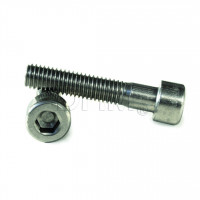
Cylinder head (DIN 912 / ISO 4762)
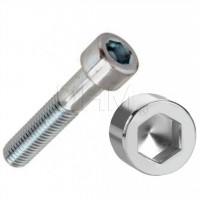
The cylinder head screw with hexagon socket is the most versatile and widespread. The cylindrical head protrudes above the mounting surface, providing a large bearing surface for load distribution. The height of the head allows a deep hexagon socket, which ensures a good grip for the spanner and reduces the risk of stripping.
Typical applications: fastening of mechanical components (linear guides, shaft supports, motors stepper), assembly of extruded aluminium profiles, assembly of components on 3D and CNC printers. It is the 'default' screw when there are no specific constraints on head projection.
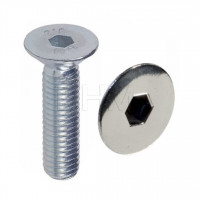
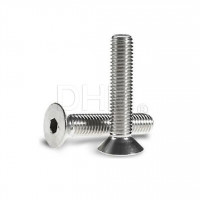
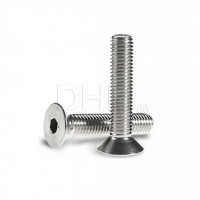
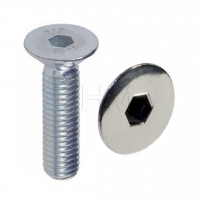
Countersunk head (DIN 7991 / ISO 10642)
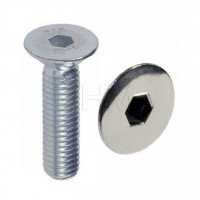
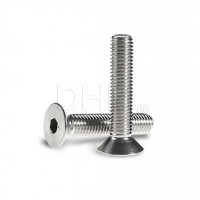
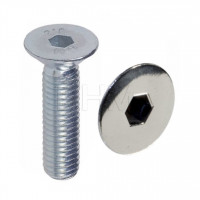
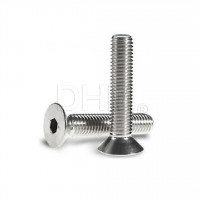
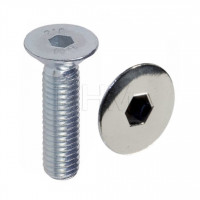
The countersunk head screw is designed to be recessed into a tapered hole (countersink), flush with or below the mounting surface. This is essential when the surface must be smooth: roofing, panels, sliding plates, or any place where a protruding head would be in the way.
Caution: countersinking requires a machined hole with the correct geometry (90° angle). The hexagon socket is smaller than the cylindrical head for the same diameter, so the maximum tightening torque is lower.
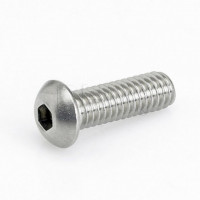
Pan head (ISO 7380)
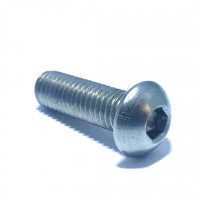
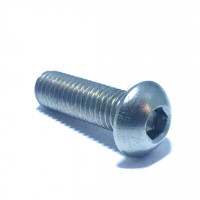
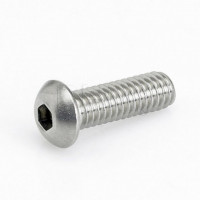
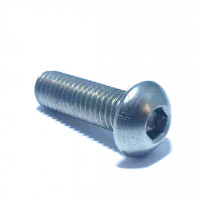
The pan head screw (or button head) has a low, rounded profile that offers a compromise between the cylindrical head and the countersunk head. It protrudes less than the cylindrical, has a more aesthetically pleasing appearance and does not require countersinking. The hexagon socket is smaller than the cylindrical.
Typical applications: fasteners where aesthetics matter (panels, shells, trim), applications where a low profile is needed but without the need to be completely flush, and fastening 3D printed components where countersinking would be impractical.
Summary table
|
Type |
Standard |
Profile |
Max. torque |
Main use |
|
Cylindrical head |
DIN 912 |
Protruding |
Maximum |
General mechanics, the default |
|
Countersunk head |
DIN 7991 |
Flush |
Medium |
Smooth surfaces, panels |
|
Domed head |
ISO 7380 |
Low, rounded |
Medium |
Aesthetic, low profile |
Materials and classes
All three types are available in burnished steel (class 8.8, 10.9 or 12.9) and A2 stainless steel (AISI 304). For mechanical applications under load, class 10.9 or 12.9 steel offers the highest strength. For wet environments or in contact with food, A2 stainless steel is the obvious choice.
Screws at DHM-online
At DHM-online you will find all types of Allen screws in sizes M2 to M12, in steel and stainless steel, in lengths from 4 to 80 mm. Browse the hardware and screws section to find exactly what you need.
FAQ: Hexagon socket screws selection guide
1. When is it preferable to use a DIN 912 cheese-head screw?
The cylinder head screw is the standard choice for heavy-duty mechanical applications. Due to the depth of the hexagon socket, it allows maximum torque to be applied without risking damage to the keyway. It is ideal for mounting motors stepper, linear guides and structural components of 3D and CNC printers, where mechanical tightness is more important than aesthetic clutter.
2. What are the limits of DIN 7991 countersunk screws?
Countersunk screws are excellent for achieving perfectly flush surfaces, but they have two limitations: they require a pre-machined hole with a 90° angle and they have a shallower hexagonal recess than cylindrical screws. Consequently, they support a lower torque; if overtightened, the risk of 'stripping' the socket is higher.
3. Button-head screw ISO 7380: Why choose it?
The button head screw is chosen primarily for aesthetic and safety reasons. Its low, rounded profile reduces the risk of snagging and offers a clean design without requiring the hole to be countersunk. It is widely used for fastening external panels, protective casings and plastic components where an even load distribution with minimal visual impact is required.
4. Is it better to use class 12.9 burnished steel or A2 stainless steel?
The choice depends on the environment and mechanical stress. Class 12.9 burnished steel is the strongest solution for structural joints subject to high stress. However, it tends to rust when exposed to moisture. Stainless steel A2 (AISI 304), on the other hand, is indispensable for outdoor applications, in damp environments or in the food industry, offering total corrosion resistance against a slightly lower mechanical strength.
5. What do the DIN and ISO initials mean in fasteners?
The acronyms DIN (German standard) and ISO (international standard) indicate the technical standards that define the dimensions and tolerances of screws. For example, the classic cylindrical Allen screw is identified as DIN 912 or ISO 4762. Buying certified screws at DHM-online ensures that each component is perfectly compatible with standard assembly tools and mechanical components.