Bitte beachten Sie, dass unsere Büros vom 29. Mai bis zum 2. Juni geschlossen sind. Bestellungen, die nach 12:00 Uhr am Donnerstag, den 28. Mai eingehen, werden ab Mittwoch, den 3. Juni bearbeitet.
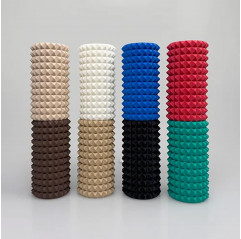
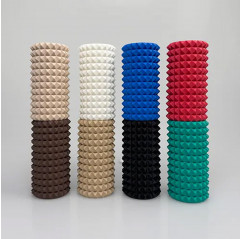
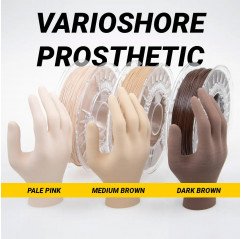
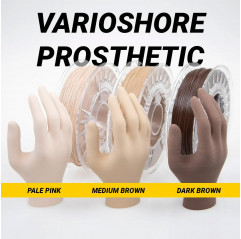
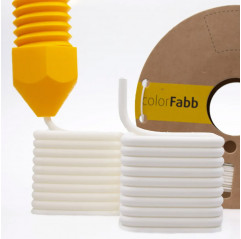
VarioShore TPU allows users to vary the density of the material by adjusting temperature and material throughput (speed & layerheight). At temperatures between 200 and 250C the materials will start to expand to roughly 1.4-1.6 times its original volume. This means the material can be printed at low flow rates (60-70%), to compensate the active foaming, which in return gives very soft printed parts. Between 190-200C the material can be printed without foaming, resulting in different haptics and harder prints compared to foamed samples.
The base TPU is a 92A material, which will work with most standard extruder set-ups for both Bowden and direct drive systems.
We advise our community to use standard TPU settings as a base setting for developing your own pre-sets. Make sure the distance between nozzle and platform is not to small, especially if the material is being foamed while printing, the pressure will need to be released from the hot-end to prevent clogging and feeder issues.
Qual è il materiale migliore per pezzi che devono stare all'esterno?
L'ASA è il materiale consigliato per l'uso esterno. A differenza dell'ABS, l'ASA è altamente resistente ai raggi UV, non ingiallisce e mantiene le sue proprietà meccaniche anche sotto l'esposizione diretta del sole e degli agenti atmosferici.
Perché la mia stampa in PETG presenta molti "fili" (stringing)?
Il PETG è un materiale molto viscoso. Per ridurre lo stringing, è fondamentale calibrare correttamente la temperatura di stampa e la distanza di ritrazione. Inoltre, assicurati che il filamento sia asciutto, poiché l'umidità assorbita peggiora drasticamente questo fenomeno.
Posso mescolare resine di marche diverse?
In generale è sconsigliato, poiché ogni resina ha tempi di esposizione e composizioni chimiche differenti. Mescolarle potrebbe portare a fallimenti di stampa o a una polimerizzazione incompleta del pezzo.
Come si smaltiscono i residui di resina 3D?
La resina liquida è considerata un rifiuto speciale. Non deve mai essere gettata negli scarichi domestici. È necessario polimerizzare i residui liquidi (esponendoli al sole o a lampade UV) fino a renderli solidi, dopodiché possono essere smaltiti seguendo le normative locali sui rifiuti plastici speciali.