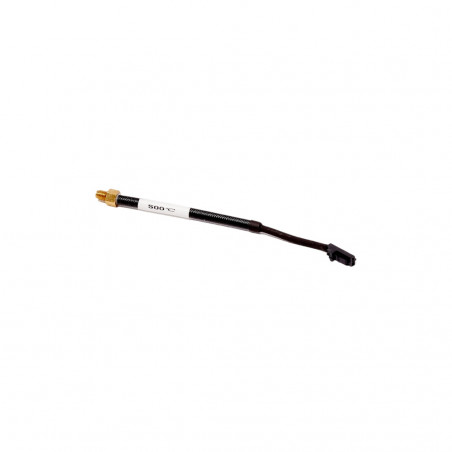
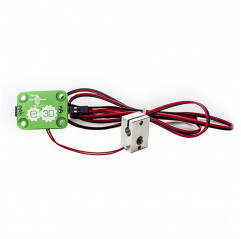
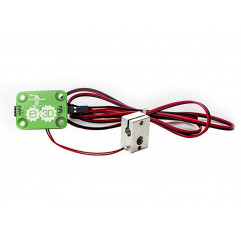
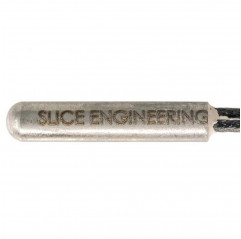
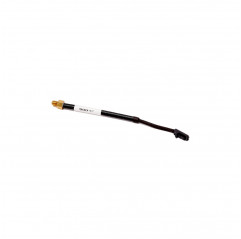
500°C - Schwarze Hülse mit Molex Mini Fit Jr Stecker
Widerstand bei 20°C gleich 5,2 MΩ
Widerstand bei 400°C gleich 250 Ω
Die Installation dieses Thermistors erfordert eine Anpassung der Firmware, bitte konsultieren Sie den Supportbereich von Dyze Design.
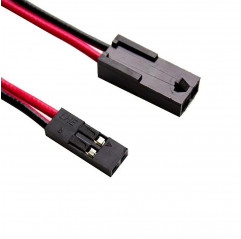
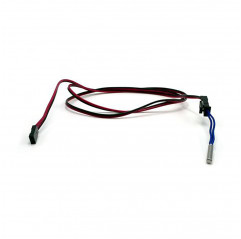
500°C - Schwarze Hülse mit Molex SL-Stecker
Widerstand bei 20°C ist 5,2 MΩ
Widerstand bei 400°C ist 250 Ω
Die Installation dieses Thermistors erfordert eine Firmware-Anpassung, bitte konsultieren Sie den Support-Bereich von Dyze Design.
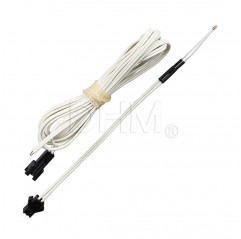
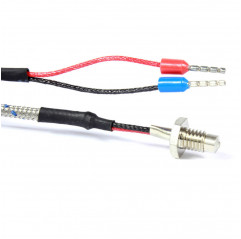
300°C - Weiße Hülse
Widerstand bei 20°C ist 98,6 kΩ
Widerstand bei 250°C ist 225 Ω
Der Thermistor ist in den meisten Firmwares vorkonfiguriert, bitte konsultieren Sie den Supportbereich von Dyze Design.
Paket enthält: 1 x Dyze Design Thermistor
Die bei der Bestellung gewählte Variante wird geliefert: 300°C oder 500°C oder 500°C SL.
Für weitere Informationen nehmen Sie bitte Kontakt mit uns auf.
Der Artikel, den Sie erhalten, kann sich je nach Produktionscharge in einigen Merkmalen von dem auf dem Foto abgebildeten unterscheiden. Trotzdem bleibt die Funktionalität erhalten.
Qual è la differenza tra un estrusore Single Drive e uno Dual Drive?
L'estrusore Single Drive utilizza un solo ingranaggio motorizzato e un cuscinetto a pressione. Il sistema Dual Drive utilizza due ingranaggi controrotanti che afferrano il filamento da entrambi i lati, garantendo una forza di spinta doppia e riducendo drasticamente lo slittamento, specialmente con filamenti tecnici o velocità elevate.
Quando dovrei sostituire l'ugello (nozzle)?
L'ugello va sostituito quando si notano problemi di stampa, specialmente superficiali, o se il diametro del foro si è allargato a causa dell'usura (comune con materiali abrasivi). Un ugello in ottone usato con fibra di carbonio può rovinarsi in poche ore di stampa, mentre uno in acciaio temprato può durare mesi.
Perché il mio estrusore scatta (fa rumore di "clic") durante la stampa?
Il rumore di scatto indica che il motore non riesce a spingere il filamento. Le cause, tra le altre, possono essere un ugello parzialmente ostruito, una temperatura di stampa troppo bassa, o una velocità di estrusione eccessiva per le capacità termiche del tuo hotend, un meccanismo non adeguato al tipo di filamento utilizzato.